Wednesday, October 28, 2020

The Alt-Hist File: The Phone Booth: Season 2

 Well, it looks like I'm going to be following up at lot of the shows I gave review to in the past. I've reviewed lots of season ones, now I get to review season twos. Usually, I'd add something more to open with, but I think we should just jump right into it. We're taking a look at season two of The Phone Booth.


First, a quick recap. The Phone Booth takes place in a world where ninety-nine percent of humanity has developed superpowers following an event in 2004 known as B-Day. The series follows investigative podcasters Joe Pollard as he travels across America to interview different people about how having superpowers has changed their lives. 

This season changes the format a bit. The Covid-19 Pandemic still happened in the world of The Phone Booth. As such, Joe can't travel around. Instead, he has people email their stories to him, and he reads them aloud, occasionally with some assistance. However, just because this season is a bit more barebones doesn't mean the stories pack any less of a punch.

The Phone Booth, like many audio dramas, was dealt a bad hand with regards to the Covid-19 Pandemic. Still, Keenan Ellis made it work to the best of his ability. He handled the narration for episodes with male protagonists, and he got Elizabeth Seely to narrate the episodes with female protagonists. The episodes from the first half of this season are purely narration, but the episodes from the second half include some sound effects. As previously mentioned, despite the limited working conditions, the stories pack quite a punch. In fact, I'd go as far as to say that they're easily on par with what we got in season one in terms of writing quality. Keenan certainly made the most of what he had to work with.

Okay, let's tackle the individual episodes. The episode numbering continues from last season, which ended on episode six. Our first episode is a two-parter. Episodes seven and eight are titled "Crossroads." Joe receives an email from Archibald Turn. He talks about the chaos immediately following B-Day. However, he also talks about how Nashville, Tennessee became the heart of a renewed music movement. The heart of this movement was a bar called Crossroads.

This season of The Phone Booth saw the introduction of two-part episodes. In fact, all but two episodes of this season are two-parters. Keenan has mentioned in the past that he had been writing the scripts of The Phone Booth for many years. I don't know how long this episode was planned. I bring this up because I thought that maybe music wasn't the best subject to start of the season given the reduced production capacity. In an ideal world, it would have been nice to hear some of the music, but I understand that Keenan was having to make the most of the hand he was dealt. Pretty sure none of us on the podcasting could have seen the pandemic coming. For what it's worth, I found the writing itself to be very compelling. I've mentioned in the past, Keenan is an excellent narrator. He was more than capable of carrying the episode on his own. Even without hearing the music, I had a very clear feeling of what it would sound like.

It was interesting to see how the entertainment industry was affected by B-Day. Though, on minor criticism I would have would be that I wouldn't have gone with Covid-19 happening in the world of The Phone Booth like it did in ours. I would have gone with something more fitting to the universe. Say, maybe some sort of new disease that mutated as a result of B-Day, or maybe someone with disease powers getting out of control. Still, that's just a fairly minor point.

Overall, the season starts out strong with a fairly good two-parter.

Episode nine is titled "Safe Space." Joe gets an email from a yoga instructor named Alice Kessler. When she was a child, she was happy and adventurous. Then she hit puberty and was struck by crippling anxiety and agoraphobia. She became a paranoid recluse and a shut-in as an adult. In fact, the highlight of her week was briefly chatting with the cute pizza delivery boy. Oh, but she got plenty of time to chat with him once B-Day happened.

The writing on this episode was very well-written, but it somewhat dismays me that I found the protagonist as relatable as I did. I've had my own dealing with anxiety and depression. The part where the pizza boy is the highlight of her week was also regrettably relatable. I liked how there's wasn't any trigger for Alice's anxiety, it just happened for no apparent reason. I found it interesting that Alice's power is to generate force field bubbles. There are several episodes of The Phone Booth where people's powers appeared to be luck of the draw more than anything. This episode seems to hint that people's personality plays at least some role in determining what powers they get. Alice wanted to retreat into her own little bubble, and B-Day gave her the power to literally do that.

On the other hand, perhaps it depends on what you happened to be doing when B-Day struck. Alice and pizza boy wound-up buried beneath the rubble of her apartment building, but survived because she created a force field in-time. Pizza boy got the ability to see in the dark, a fairly useful skill in such a situation. But there are other episodes, as we shall see, the suggest that powers really do just develop at random. In any event, it is nice to see that things worked out for Alice, and that's she's working on becoming a little more social.

All in all, another strong episode of The Phone Booth.

Episode ten is titled "Costume in the Closet." Joe gets an email from a man named Mason Demyer. He tells about what it what like to be a parent in the days following B-Day. He also discusses his short-lived stint as a superhero.

This was another very interesting episode. It showed that most people who got powers weren't in a rush become superheroes. Or if they did, they didn't stick to it very long. Let's use Mason as an example. He gained the ability to fly...and that's it. He's not any stronger or more durable than your average non-powered human. Sure, maybe he could drop somewhat heavy objects on people from above, but he really wouldn't be much use in a fight. Hey, at least Hawkman has a mace. There's also the fact that it can get pretty cold up in the sky, and a spandex suit probably won't provide you very much warmth. Mason found that out the hard way. It always amazes me, when I'm flying in an airplane, to think that the temperature outside the airplane in the negative degrees.

Then there's the fact that, though crime occurs regularly enough, you aren't going to come across a crime every time you go patrolling. In fact, most of the time patrolling would be rather boring. I worked student patrol my first year of college, so I speak from experience on this one. Still, Mason was able to find happiness even without being a superhero. And hey, his power is great for saving kites from trees.

An episode that has elements of deconstruction, but never gets too dark for its own good. Once again, an excellently crafted episode.

Episodes eleven and twelve are titled "Animals." Joe requests a message from a death row inmate named Jesse Dominski. By the time Joe got the letter, Jesse had been executed. She served as a field veterinarian in the Rocky Mountains in the years following B-Day. Her specialty was anitropes; people who mutated into human-animal hybrids following B-Day. Jesse recounts the story of uncovering an illegal anitrope poaching operation, and how this set off a series of events that landed her on death row.

I'd been hoping we'd get an episode about the human-animal hybrids, and now here we are. And it's a two-part episode at that. Throughout the episode there's a running question of just how human the anitropes are. Most people view them as just mindless animals without any shreds of humanity left. Jesse, however, maintained that they are still human, even if they have changed quite a bit. I'm inclined to agree, as there is evidence to support this view. My personal theory is that the anitropes retain their original memories and personalities, but have been reduced to animal-level in intelligence. Obviously, this means they can't form complex thoughts anymore, and often default to instincts. They're aggressive, but no worse than a wild animal would be if a human gets too close. I'd imagine most anitropes feel scared more than anything, and this, combined with their inability to form complex thoughts often leads them lash out and attack humans.

There is evidence within the episode that support's this. Jesse's sister became an anitrope following B-Day, and seems to have retained some of her memories and personality. Though, eventually she did get the urge to join an anitrope pack in the mountains. Apparently, anitropes are among the top ten most common powers following B-Day. Most character mention lots of people flying after B-Day, so we know flight is fairly common. I'd also imagine super strength is fairly common, as Jesse is the second character we've encountered with that power. I wonder what the other seven are. Also, I loved how Keenan included bits of ambient noise, particularly animal sounds, to help give a little something extra to this episode.

I sympathized with Jesse's perspective, but I could see where the other charters were coming from as well. Anitropes probably killed a lot of people following B-Day. It's also mentioned that there were a lot of executions of prisoners following B-Day. In some cases, it was because conventional prisons simply could not hold them, or because they might start a riot, which would be even worse given that most of the other prisoners also have powers. The point being, the post B-Day world was a harsh and unforgiving place, and that often meant having to make tough calls. Though, I'm still with Jesse. If a human kills an anitrope, and it isn't in self-defense, it ought to be considered murder. I thought that the reveal of the poacher's identity was well-done, though I had my suspicions as the reveal got closer. I also thought the poacher's power was pretty ingenious. It is certainly sad that Jesse was executed for killing the poacher, but perhaps someday, history will vindicate her.

This was an episode I was hoping we'd see, and it certainly did not disappoint.

Episodes thirteen and fourteen are titled "Champ." Bishop Cline is widely considered to be the founding father of the United States of New England. However, he doesn't consider himself a hero, just a man. In fact, the way he tells it, his cousin Charlie was the real brains behind the new nation. He recounts his childhood with Charlie, and their hunts for the elusive cryptid Champ. He also tells of how he and Charlie forged a great, if flawed, nation out of the ashes of B-Day.

First of all, I wanted to clarify that Bishop is the guy's first name. He's not a clergyman. I was wondering how Keenan was going to top the last two-parter. As it turns out, quite well indeed. Last season, it was mentioned that America split into five nations following B-Day. The way things were described made it sound like America reunited, but this episode seems to indicate that America is still Balkanized. Though we did get hints of that last episode, where it was mentioned that the Rockies are considered the broader of civilized America. Everything west of the Rockies is apparently the Wild West reborn. Well, except for Los Angles, which is dominated by the hive-mind entity known as The Union.

In my younger day, I too fantasized about securing for cryptids, before I wised up to all that. Still, they are fun part of what I consider to be the modern-day mythology of America. Champ is a Loch Ness Monster style cryptid claimed to live in Lake Champlain. Bishop power is that his bones turned to iron. This would give more evidence toward the idea that powers develop at random. He was out on the lake with Charlie at the time; the last place you want to be with heavy iron bones, especially when you can't breathe underwater. And it does appear that each person only gets one power, so thank goodness Charlie got the boat ashore in time. On a related note, this episode does give evidence towards my theory of anitrope psychology. Bishop recalls seeing anitropes waiting for crossing signals and holding the door open for each other. This suggest they do retain their personalities and memories, if only in a limited capacity.

I liked how this episode showed how society rebuilt following B-Day. Bishop and Charlie rallied together and formed a new army known as the Iron Core. The cities and towns of New England, like pretty much everywhere else, had basically become independent city-states following B-Day. The Iron Core untied the scattered towns and cities of New England into a new nation: The United States of New England. Bishop handled the military stuff, while Charlie handled the governing of the USNE. For a while all was well, but then Boston happened. Up until then, the USNE only expanded its territory to towns that couldn't survive on their own. Boston was self-sufficient and had no desire to join the USNE. Despite this, the USNE declared war on Boston.

I should here note that Boston's full name was the Principality of Boston. So, the cradle of the American Revolution reverted to monarchism? Hmm, maybe they deserved to get conquered, but I digress. Anyway, Charlie was opposed to this, but he lost support due to the people losing trust in a man without powers. So, he stepped down and Bishop took over, but then he too lost support after the economy turned bad.

I had wonder if people without powers faced discrimination. It appears, at least in this instance, the answer is yes. This is particularly sad as Charlie seems to have been a fairly competent leader. After being ousted from power, he moved to the Northeastern Kingdom, which is apparently a region in Northeastern Vermont, and not a nation like initially assumed. Still, the United States of New England is one of the most stable nations of the post B-Day world, so Charlie and Bishop's efforts weren't in vain. Granted, they occasionally had to indulge in questionable actions at times. We get hints that the towns the Iron Core "liberated" weren't as destitute as we have been told. Then there is the business with Boston.

A powerful end for season two of The Phone Booth.

And so that's all the episodes of season two of The Phone Booth. Keenan was dealt a tough hand by the pandemic, but he certainly made the most of what he had to work with. I am very much looking forward to season three. It's going to be a while until it comes out, as Keenan wants season three to be the best it can be. Obviously, that will be much easier once the pandemic clears. It also turns out that season three will be the final season of The Phone Booth. I know Keenan has other projects he's working on, such as his newly launched podcast The Endless Ocean, but I still can't believe season three will be the end. It feels like we've just scratched the surface of The Phone Booth, and the stories just keep getting better. Still, I'm aware that there's only so many hours in a day, and only so much time that can be devoted to producing audio dramas. I eagerly await season three, and I wish Keenan well in all his future endeavors.

But enough about all of that. If I haven't made it clear by now, you should really go listen to season two of The Phone Booth. Unless you haven't listened to season one, somehow, in which case listen to it, then listen to season two. It is a quality superhero audio drama, and I can't recommend it enough.

Well, I think that should do it from me for now. I will see you guys next time.

Tuesday, October 20, 2020

The Alt-Hist File: Prototype World of Tomorrow: Fair Weather Foes

I've been tackling podcast by individual season lately. Well, unless they're an anthology, or something similar to an anthology. I've got a lot of season one reviews, but none for any seasons beyond that. Well, I'm happy to say that changes today. We're taking a look at season two of Prototype World of Tomorrow: Fair Weather Foes.


Just as a recap, Prototype World of Tomorrow takes place in a world where Walt Disney's dream to create an Experimental Prototype Community of Tomorrow became a reality. It has been a month since the events of Murder in Progress. In that time, Progress City's only private detectives Tim E. Less and Eve R. More have been...struggling to find work and a permanent office. Thankfully, they've recently gotten a case. The Progress City Weather Department has been subject a series of sabotage and trespassing attempts. It is believed that the protest group Spirit of Tomorrow is behind here attacks. The annual air show is due in a few days, and tensions are running high. Can Tim and Eve catch the perpetrators before it is too late?

Prototype World of Tomorrow wowed me with an excellent first season. If season two is anything to go by, the show stands to keep getting even better. First, let's talk about the newest additions to the cast. Remember last time when I suggested that Benjamin Lancaster ought to consider asking Kevin Perjurer, of Defunctland fame, to join the cast? Well, that wish has come true. Kevin joined the cast as Doug McDonald. He's a hotshot aeronautics engineer eager to unveil is latest prototype personal ornithopter. That is, it is a machine that flies by basing its wings on those of insects, such as dragonflies. Kevin is known for his excellent narration skilled over on Defucntland, but it is here that his acting skills get a chance to shine. Kevin really should consider taking more voice acting roles in the future. Also, you should check out the video he did about Walt Disney's plans for Progress City and...well, basically, just binge the whole channel after that. Seriously, it is great stuff, and he puts a lot of love and dedication into the videos.

But there is an even big surprise joining the cast this season: me! I am in this season of Prototype World of Tomorrow...sort of. There was a casting call, back when Fair Weather Foes was still in production, for fans of the show to submit audio samples of themselves performing a series of short lines. The goal was to get enough submissions to create the illusion of a large crowd for certain scene. Naturally I was more than willing to answer the call. Admittedly, I forgot about it until the last day, but I got my submission in on time. Most of you probably have no idea what I sound like. Even if you did, the voices are so mixed together you can't pick me out. Still, it is fun to know that I got to be part of one of my favorite podcasts, even if only in a small way.

The scene in question are when Tim receives an invitation to join the protest group Spirit of Tomorrow. They object to the residency laws in Progress City. The laws say that all residents may not stay in Progress as long as their work visas last, and there are no extensions. There used to be extensions on visas, but that got abolished awhile back. You can also be kicked out of Progress if you lose your job, or aren't attending a school or university. Spirit of Tomorrow believes that there should be no limits on visas. Furthermore, they also believe that everyone who wants to live in Progress should be allowed to stay, even if they don't have a job. I wasn't quite sure what Spirit of Tomorrow supported when I signed up to be an extra, but I suppose there are worse positions to take.

Spirit of Tomorrow also believes that the Chime network of Progress is leading to, paradoxically, both too much and too little connection, and should be done away with. Chimes are devices that all citizens of Progress use. They're pretty much smartphones in all but name. You can check the news feed, place calls, send text messages and more. They're treated as the height of technology, despite not appearing to do anything a smartphone couldn't. Were smartphones never invented in the world of Prototype World of Tomorrow? For that matter, when is it set? I always assumed it was supposed to be the present day, but I could be wrong.

When Tim first arrives at the Spirt of Tomorrow meeting, he his greeted by a presentation that explains the history of the Chimes Network. This includes a song, courtesy of the Progress City Municipal Virtual Choir. That was the other call that went out before this season premiered. Everyone auctioned based on their singing type, everyone was given lyrics to sing and record, and then the voices were blended together into a glorious whole. I passed on that one, as singing is a bit outside of my usual wheelhouse. I must say, I am amazed at how well it turned out. It sounds like one of those Sherman Brother's songs you'd see at early Magic Kingdom attraction. Most famously, they wrote "There's A Great Big Beautiful Tomorrow" and "The Best Time of Your Life" for The Carousel of Progress. Progress City Municipal Virtual Choir is astounding in its production values. I would never have guessed that it was all recorded remotely if I hadn't already known. I certainly hope this isn't the last we've seen of Progress City Municipal Virtual Choir.

As the name of the season suggests, the city weather department plays a major role in the plot. They have developed technology that allows them to manipulate the weather. At first, I was confused, as that seemed to imply that the dome covering Progress City was large enough to generate its own weather systems. That would imply that that Progress is awfully big, especially for a city of only 50,000 residents. Then it was clarified that the dome only covers about fifty-five percent of Progress. The weather department can even capture storms and other weather systems. They're most proud of having captured Hurricane Zeke. I saw from that start that it was going to get loose, it was only a matter of time. But really, did nobody question the wisdom of keeping a live hurricane stored in the middle of a heavy populated area? Of course, in Progress City, there seems to be more emphasis on if it is possible to do something, rather than if you should do something, or what the consequences will be.

One thing I noticed this season was that it kind of felt like Tim got dumber. In season one, while certainly not as smart he portrayed himself, and in way over his head, Tim did at least display reasonable competence at times. Here, however, it almost seems Eve's primary function is to be Tim's babysitter. Granted, this partially could be because Eve is there from the start this season, and thus serves as even more of a foil to Tim. A foil is band of metal put around a gem to emphasize the qualities of the gem by contrasting with it.

That having been said, I did still enjoy the dynamic that Tim and Eve had. It only just now occurred to me that their names are Timeless and Evermore. Sometimes I'm a bit slow on the uptake. One of their main goals this season, besides solving the case, is getting a permanent office. Eventually, they get an offer in the Switzerland section of the International Tapestry. Unfortunately, it is sandwiched between the Progress City Yodeling Conservator and a sauerkraut factory. I wasn't aware that the Swiss shared Germany's love of sauerkraut. Though more to the point, this is another reference to never built EPCOT attractions. For the longs while there were plans to build a Switzerland pavilion in the world showcase. It was often rumored that this would be where Disney World's version of the Matterhorn would be. The plans fell through, but we did get Expedition Everest over at Animal Kingdom, which features a yeti. So, in a roundabout away, I guess Disney World did get the Matterhorn.

Another little detail I enjoyed is that Tim's apartment building has a series of pneumatic tubes that transport food to the residents. He often uses it to grab a bagel with lax if he doesn't have time to great a proper breakfast. And yeah, lax not lox, because the company that makes them can't legally call them lox. It's amusing because the proposed plans for the city of EPCOT did indeed include pneumatic tubes. It's even more funny because of a video I saw on Voices of the Past, one of my favorite YouTube channels, which proves readings of primary historical sources. The video was about people in 1901 speculating on what 2001 would be like. Yes, they did predict we'd have pneumatic tubes delivering our food by now. It easy to laugh at them, but many of their predictions weren't too off the mark. If I haven't made it clear, you really should watch the excellent video.

Prototype World of Tomorrow also has a Christmas Special. It's an adaption of the Charles Dickens short story "The Signalman." Eve's aunt used to be the control of the Progress monorail system. It has since become automated, but she still keeps watch. Eve and Annie are both very concerned about her, as she's been even loonier than usual. This is particularly stressful as Christmas is fast approaching.

First of all, I'll give Ben Lancaster credit for not going with the typical choice of adapting A Christmas Carol. I think I listened to The Signalman at some point in the past. I remember not caring for it much. So, even more points for Prototype World of Tomorrow creating an adaptation that I genuinely enjoyed. You've got all the typical wackiness we've come to expect, but underneath it all there's a strong sense of creepiness and foreboding. There's a sense that there might be darker forces at work in Progress. Well, darker than usual. Hey, as the song goes, scary ghost stories and tales of the glories of Christmases long, long ago.

Ghost stories were once part of the Christmas season, but have largely fallen out of favor now that Halloween covers most of the spooky stuff. Only the Christmas tales of Charles Dickens survives as a remnant of this tradition. As such, it is nice to see a Christmas Special that evokes the spirit of those old tales. In fact, Dickens saved Christmas in the English-speaking world. A Christmas Carol almost single-handedly revived the Christmas, which was starting to fall out of fashion at the time. In fact, it almost didn't get published because Dickens' publishers thought Christmas was too niche of a holiday. Yes, you read that correctly. Thank you for saving Christmas, Mr. Dickens

This is also the first time we've had someone other than Tim act as narrator. I hope we get some more episodes with Eve as the narrator. Speaking of narration, I may say that Callie Wills and Isa Jones give exceptionally good performances as Eve and Annie. I could easily believe them being sisters.

Apparently, Progress has an annual Nativity pageant. You know, I always did wonder how religion worked in Progress. Granted, it is possible they do it out of tradition rather than religious conviction. Schools in Britain often have Nativity pageants because of tradition; despite the United Kingdom being fairly secular these days. Perhaps it is the same in Progress. And because irony is the unkindest god of all, Tim gets cast as one of the wise men.

It's a Christmas Special that goes against the usual grain, but one that works exactly because of that.

Fair Weather Foes was a worthy follow-up to Murder in Progress. From the sound of it, season three. From what hints we get towards the end, it sounds like it will involve genetically engineered monstrosities. That has a lot of potential, and I can't wait to see what Ben and the gang come up with. But enough from me, go and check out Fair Weather Foes, the latest season of Prototype World of Tomorrow. It is well worth your time.

Well, that's enough from me for now. I will see you guys next time

Tuesday, October 13, 2020

Book Review: Inceptio by Alison Morton

 I hang out on a lot of alternate history groups on Facebook. This means I often cross paths with several independent alternate history authors. Many of them produce some very promising sounding novels. Sometimes, when the planets align just right, these books even get released as audiobooks. And as I've said before, I'm more than happy to help those who ask for reviews. Where am I going with this? It relates to the book we're going to be reviewing today. We're taking a look at Inceptio, Roma Nova book 1, by Alison Morton.


The Roma Nova series is set in a world where a group of several patrician families fled the city of Rome after Emperor Theodosius outlawed paganism. The leader of this group, named Apulius, had a Celtic father-in-law who owned lands to the north of Italy. In time, these lands would become a new nation: Roma Nova. Eventually, Old Rome fell, but Roma Nova endured as the final remnant of the old pagan Roman Empire. The story of Inceptio begin in the modern day in New York City. Karen Brown has her life turned upside down when she is nearly assassinated. It turns out that Karen is the granddaughter of one of the most powerful women in Roma Nova. It is decided that the best course of action is to bring Karen to Roma Nova for her own safety. Karen has known about Roma Nova from stories her mother told her, but now she's about to experience it for herself.

I have known about the Roma Nova series for a while due to various post and interactions Alison has made in the Alternate History Online group on Facebook. Of course, the series wasn't initially in audio, and I've covered before how that is an issue. Thankfully, the first four books in the series have been adapted into audiobooks, and now here we are. Usually, I like to read most or all of a series before I review it. However, as I somewhat know Alison, I thought it would be polite to go ahead and review the first book in the aeries as a gesture of kindness and appreciation.

Okay, let's delve into the history of Roma Nova itself. That is, the nation not the series, but I'm sure we'll probably talk a bit about that as well. I've already told you the basics, pagan patricians fleeing persecution founded their own nation. The Roma Novans made alliances over the years and expanded their territory. By the present day, they're about the size of Luxembourg, and are located about where Slovenia is in our world. However, it is also mentioned that Slovenia still exists. Traditionally, silver mining served as the backbone of the Roma Novan economy, and proved a major boon in the early days of Roma Nova. These days, Roma Nova is home to many tech companies and start-ups. Roma Nova has traditionally been leaders in technology and innovation.

So, Roma Nova caught some lucky breaks early into its history. It's high enough in the mountains to be easily defensible, but not so high that they can't grow all of the delicious foods Romans like to eat. It has the basis for a good economy, and has managed to avoid most major conflicts. This isn't to say that Roma Nova never got involved world affairs. For example, they contributed troops to the Battle of Vienna in 1683. They also helped push back the forced of Napoleon IV. From this, we can gather that the Napoleonic Wars went differently than in our world. Still, Roma Nova stayed out of the World Wars. Certain lines of dialogue imply that the German Empire won World War I, only to break-up later. More recently, Roma Nova has, begrudgingly, joined their world's equivalent of the European Union and NATO. Apparently, the Soviet Union is still around, and the Eastern Bloc equivalent isn't too far from Roma Nova.

Maybe Roma Nova did catch some lucky breaks, but I'd say they're at least somewhat plausible. Nations like Luxembourg and San Marino survived by playing major powers-off of each other, and other such tricks, but just as often, they survived due to pure chance and dumb luck. Sometimes reality really is stranger, and more unbelievable, than fiction. The only real issue I can think of is that Christian nations might not have been very willing to do business with a staunchly pagan nation like Roma Nova. Still, the Norse established quite the trading network before they converted to Christianity, so you never know.

We'll came back to Roma Nova in just a minute. For now, let's go across the Atlantic and see what things are like in North America. It's is mentioned that Louisiana and Quebec are, basically, dominions of the French Empire. This, along with how the United States never expanded beyond the Mississippi River, suggest that the Seven Years War went differently than in our world, assuming it even happened at all. America is called the Eastern United States, because there was supposed to be a Western United States to go along with it, but never materialized. The leaders of the American Revolution were more fragmented than in our world, so the British were able to quash the rebellion. However, America was granted independence in 1865. Also, the Dutch held onto the New Netherlands until 1813. Despite this, New Amsterdam is still called New York, as it is in our world. So, it would appear the Second Anglo-Dutch War happened differently, if it happened at all.

I spot a few issues here. First off, it's kind of odd that the British left America full stop in 1865. Wouldn't it make more sense for America to become a self-governing dominion, and then transition to full independence like Canada did in our world? Or perhaps the Revolutionary War could have been averted all together. It is speculated that, had the French won the Seven Years Wars, and either gained the Ohio River Valley or kept their North American colonies, it might have resulted in Britain's North American colonies having a closer relationship with their mother nation, and thus being considerably less likely to rebel.

On that note, the fact that the Dutch kept the New Netherlands until 1813 also makes an alternate American Revolution questionable. The New Netherlands would cut British North America in half. This would cause New England and the Southern Colonies to drift further apart in terms of culture and their relationship to each other. This means a united revolt is unlikely, especially since the South was traditionally largely Loyalist, and perhaps more so in such a scenario. In fact, even if they did get independence, the colonies might choose to become separate nations. This is sort of like how Australia and New Zealand as separate nations, despite being former British colonies locate relatively close to each other.

Okay, but even assuming the disunited British colonies would choose to be a single nation, why would New Netherlands be part of them? They were ruled by a separate nation, got their independence sooner, and presumably have a very different culture compared to British North America. I should have noted this before, but it is mentioned that Alaska is a colony of the Eastern United States. This is despite the EUS lacking any land bordering the Pacific Ocean. Uh, how does that work? Does the EUS own the Panama Canal? For that matter, is the canal even in Panama, or is it in Nicaragua?    

We're also given hints that the Native Americans survived in the western portions of the Eastern United States due to the British sticking around. I highly doubt this, given that Canada and Australia screwed over their native populations just as much as America did. It is also mentioned that the capital of the Eastern United States is Washington. First off, Washington wasn't a preexisting city. It was created after America got its independence as a city that was neither Northern nor Southern. Even if it somehow still gets founded, I seriously doubt it would be named after an anti-British rebel...unless Washington fought for the British in the world of Roma Nova.

Now, one touch I did like is that there is still resentment amongst some people, especially in rural areas, over Britain suppressing the rebellion. In our world, a disturbingly high number of people bemoan the fact that the Confederacy lost the American Civil War. This resulted in the Lost Cause narrative, which deified the Confederates as noble defenders of the South, and totally ignored the brutality and inhumanity of slavery. So, it is possible that something similar happened with the American Revolution in the world of Roma Nova. 

Okay, so the worldbuilding outside of Roma Nova has some issues. That's not necessarily a bad thing. Roma Nova is the focus of the novels, as it rightly should be, and the rest of the world is primarily there to add flavor to the setting. Obviously, this means that rest of the world wouldn't have the same amount of attention and detail put into it. I've done this a lot of times in my own writing, and so have plenty of other alternate history writers. The depiction stood out to me as an American. I'm sure that there are certain things about British History I've missed in my own writings.

Okay, now that we've got that out of that way, let's talk about characters, and a but more about Roma Nova itself. Karen is actually the Anglicization of our protagonist's real name, Carina. Her mother was Roma Novan, her father was British, and she was raised in the Eastern United States. She speaks Latin due to taking Saturday Morning Latin Class. She serves, in this novel at least, as the audience surrogate. We learn about Roma Nova through her eyes, and she the one who asks questions that explain how Roma Nova works.

She has a love interest in the form of Conrad Tellus. He's half-Austrian and half-Roma Nova. I kind of had a hard time envisioning him. The church my family attended had three ministers, one of whom was named Conrad. As such, I always associated Conrad as being an old man name. Though, I concede, this is more of a just me issue.

So, a bit about Roma Nova I should have mentioned before. Roma Nova has an extremely high degree of gender equality, and they always have. In fact, in certain regards, women have the upper hand in Roma Novan society. Early in the history of Roma Nova, men had to commit to the defense of the fledging nation, while women were left to run the settlements by themselves. Women quickly rose through the ranks of the new government, and some even joined in the fledgling army of the new nation.

This isn't as crazy as it might sound. Imperium, the right of rule, was very important to Roman society. How much imperium you had depended on your social standing. The male head of household would have the most in a villa, but it wasn't uncommon for his wife to have the second most imperium within the family. Furthermore, highly martial societies such as the Spartans, the Mongols, and the Aztec often had great gender equality because women had to keep things running while the men were off to war. I should also probably mention the inspiration for the series. Alison first got the idea for Roma Nova when she visited some Roman ruins as a child. She began to ponder what it might have been like if woman had been allowed to rule the Roman Empire.

Despite Roma Nova being a republic, Carina's grandmother, Aurelia Mitela, is one of the most respected people within the Roma Novan government. In fact, Carina's family is practically royalty by Roma Novan standards. She even remarks on how it is like The Princess Diaries...which was somehow still written, meaning Meg Cabot must somehow still exist. This raises an even bigger question: does Rick Riordan exist in this world? If so, did he still write Percy Jackson and the Olympians? And what would the Roma Novans think of it? Hmm, I guess that's really only a question I would care about.

Modern Roma Nova pays homage to its ancient roots in numerous ways. Gladiator games are still a popular, but they're no longer to the death. You also can't maim or seriously injure your opponents, and everyone where's safety gear. Police departments enjoy bread and honey rather than doughnuts or...whatever it is British police officers stereotypically eat. Roma Nova, as mentioned, worships the traditional Roman gods, but secularism is on the rise in more recent times. And they all still speak Latin...somehow. Roma Nova might have taken step to preserve the language, but look at how many languages Latin splintered into in our world. Surely, Latin in Roma Nova would have gone through at least a few changes?

Roma Nova certainly sounds like a fairly nice place. I'm not sure if I'd want to live there, but I certainly would want to visit it if I could. I did like that it isn't shown to be completely perfect and does have its own problems. For example, Roma Nova currently has a bit of an illegal drug problem, and they had a civil war back in the 1960s. The flaws made Roma Nova feel more like a real place.

Inceptio is really about setting up the action for the rest of the series. In that regard, it does an excellent job. My only complaint would be that the ending felt a tad rushed. Other than that, Inceptio is an excellent book. I really will have to get back to checking out the other books in the series. Thankfully, this will be easy, because the first four Roma Nova books are available as audiobooks. Inceptio is narrated by Cailin Thorburn, who does an excellent job.

So there you have it. Inceptio is a great start to what looks to be a very promising alternate history series. It has my attention, and I’m eager to see where the story goes from here. Check it out if you haven't already. 

Well, I think that's enough from me for now. I will see you guys next time.

Saturday, October 3, 2020

Book Review: Lake on the Moon by H.E. Wilburson

I've already given my spiel about my policy with reviews. As such, let's cut right to the chase with this one. We'll be taking a look at Lake on the Moon, book two of The Martian Diaries, by H.E. Wilburson.


Lake on the Moon picks up the actions a few years after the previous book. Ogilvy the astronomer has come to a freighting conclusion: the Martians' collective conscious is spread via the mysterious red weed. He knows because he sampled some of the red weed, and made contact with the Martian hive mind. Worse, the red weed has infiltrated the water supply, meaning the Martians might gain the ability to take over human minds. Ogilvy and George, our narrator, are going to have to push themselves to the limits of their knowledge to find a solution to this impending crisis.

In my pervious review, I noted that The Day of the Martians, had a few issues. So, how does Lake on the Moon do addressing these? It's a bit of a mixed bag. As per usual, let's start with the positives. Lake on the Moon has much better pacing than The Day of the Martians. Lake on the Moon is twice as long as its predecessor, and it certainly benefits from the additional length. I also liked how the music was a much better fit for the time period of the story than last time round. The sound-effects were also somewhat better integrated into the story.

We also get an explanation for how Ogilvy is here, despite having died in The War of the Worlds. Lake on the Moon begins with a flashback to the first Martian invasion. Turns out he was only mostly dead when he got hit by a Martian heat-ray. That is, his body was covered in third degree burns, he was in quite a bit of pain, but he survived. I liked that this segment because it really focused on what it was like for average people caught-up in the invasion. At one point it is mentioned that the hospital had to start rationing medication because of the massive influx of patients. I mean, ouch, that can't have been fun.

One of my complaints with The Day of the Martians was that it played things safe in terms of plot, and that much of it felt like little more than glorified battle scenes. I appreciated that Lake on the Moon was willing to take more risks and try new things in terms of plot. The red weed being used not only as part of a Martian hive mind, but also as a mind control plot, was certainly a unique angle. In addition to the pacing, I felt there was much more solid plot structure than in The Day of the Martians. We didn't just get action scenes; it felt, for the most part, like the proper progression of a novel's plot. I also really like how it is revealed that the Martians are returning to Earth because of the connection that Ogilvy inadvertently established with their hive mind. I also liked how the early segments of the novel had the feel of a Victorian mystery novel, with even some slightly Gothic elements to them. 

I should have mentioned this last time, but I got a slight chuckle every time Crewe was mentioned. As a lifelong fan of Thomas the Tank Engine, I remember Crewe as being the place Henry the Green Engine was sent to so he could be rebuilt, and wouldn't need his special coal anymore. Admittedly, I didn't know that when I was a kid, since I grew up with the American version narrated by George Carlin. It was just a little something that probably only mattered to me.

Once again, Harry Preston returns as our narrator. He did slightly better this time round, but he still came across as a bit too flat and monotone. For example, there's a part where the main character's wife gets crushed to death by a tripod. This is a major emotional moment, but Harry's flat and monotone delivery undermines the moment. This might be an audiobook, not an audio drama, but that's no excuse for lackluster narration. If anything, an audiobook narrator must be even more committed, and have more range, because they alone are tasked with carrying the book all by themselves.

With all of this having been said, Lake on the Moon still has a few issues. We finally get an answer for how the Martian invasions effected World War I. Oh, it was delayed by a few years, but it went pretty much as it did in our world. The Spanish Flu also went basically as it did in our world. Really now, two invasions by aliens from Mars, and that had absolutely zero impact on geopolitics? I would be more willing to accept there still being a war if there had been at least a few changes. Maybe a few changes in alliance, neutral nations picking a side, or participants from our world choosing to sit the war out. Or, maybe instead of Entente vs. Central Powers, we could have the alliances be based on something else.

Spanish Flu, maybe it could happen, but it still seems a bit unlikely. The name is a misnomer. Spain was neutral during World War I, so their newspapers were uncensored. As such, they were one of the only nations that talked about the flu before it got really big. This resulted in the flu becoming associated with Spain. It used to be believed that it came from either Kansas or Mexico, but now experts think it might have originated in China. So, would it have happened in the world of The Martian Diaries? Maybe, but still seems odd it went more or less as it did in our world.

So, what about the titular lake on the Moon. It is discovered by our narrator early into the novel. It is a liquid water lake located on the surface of the Moon. Does this mean humanity is going to develop a space program and take the fight to the Martians? Are we going to have an adventure on the Moon? Nope, turns out it was a bit of a red herring. Though the main character does advocate for humanity going into space at the end of the novel. So, I suppose it was setting things up for book three.

The Day of the Martians suffered from having too simple of the plot, but Lake on the Moon has the opposite problem. I felt that the plot became a bit too complex and convoluted for its own good. Apparently, Ogilvy believes that they need to somehow go back in time and ensure the Martians never invade Earth in the first place. When I first heard this, I got very excited. It sounded like it was setting up a crossover with The Time Machine, another of HG Wells' novels. Unfortunately, this does not happen, which is a shame because that was a serious missed opportunity. Apparently, the time travel is mental in nature, and is achieved by consuming the red weed...I think. It was all very confusing and difficult to follow.

Then the plan gets changed to possibly changing things so that Mars was never habitable to multicellular life...somehow. Again, it was confusing and hard to follow. It seemed like it was going to setting up alternate timelines and history, but we didn't get that...or maybe we did, but if so, it was hard to tell.

I would be remiss if I didn't say that Lake on the Moon is a much stronger novel than The Day of the Martians. Even if the execution didn't work out, it was at least willing to take chances, take more risks, and try new things. It also had a stronger sense of pacing, and integrated music and sound-effects into the audiobook much better than its predecessor did. That all having been said, it still has quite a few issues, and perhaps bit off a bit more than it could chew. Although, if there is a third book, I would very much like to think that all of this is a sign that said third book will be even stronger than this one.

Well, I think that should do it from me for now. I will see you guys next time.

Friday, September 11, 2020

Book Review: The Day of the Martians by H.E. Wilburson

 I'm more than willing to review any works of audio fiction that are requested. However, as I have stated many times before, I maintain a policy of strict honesty. As I have said, if anything doesn't work I will not hesitate to call it out. With all of that having been said, this brings us to the book that we're going to be reviewing today. We're taking a look at The Day of the Martians, book one of The Martian Diaries by H.E. Wilburson.


Day of The Martians acts as a sequel to War of the Worlds. It picks up the action in 1913. A new comet has been sighted, and the British government is fearful that it means the Martians are returning for another invasion attempt. An unopened Martian cylinder has been discovered in Wales, and our protagonist has been sent to investigate, with his wife Laura in tow. They'll have to be quick about it, as the fate of the world could hang in the balance.

You can purchase this audiobook on Audible, or you can listen to it in three parts over on Moonlight Audio Theater

I was asked to give this book a review by my associate Anita Dow. We know each other through various audio drama related groups that we are both members of. She has been a faithful reader and follower of my audio drama reviews for quite some time now. As such, I was more than happy to review Day of The Martians for her.

Now, books that serve as sequels to public domain works always start off with a considerable uphill climb. Right out of the gate, they're setting themselves up to be compared to the original. Most of the time, these sequels just don't measure up to the greatness of the originals. Perhaps it is because the writing is lackluster, or the authors misunderstands, or underutilizes, the themes of the original. Now, that's not to say it is impossible to create great works of fiction using the public domain. One way is to create crossovers with other public domain works. The League of Extraordinary Gentleman and Anno Dracula do this to great effect. Another is to remix and reinterpret the source material. Works such as Pride, Prejudice and Zombies and Sense, Sensibility, and Sea Monsters do this to great effect. Yet another method is to retell the story from the perspective of another character. Famous examples of this include Rosencrantz and Guildenstern Are Dead and Song of Achilles.

That having been said, this isn't always a guarantee of success. There have been plenty of lackluster works that attempted to cash-in on the success of Pride, Prejudice, and Zombies and The League of Extraordinary Gentlemen. Likewise, another method that is popular with works based on mythology is to strip away all the magic and gods and show the "true" story of what happened. Basically, showing the alleged history behind the legend. This has a tendency to backfire, as authors all too often forget that you have to make the characters compelling despite the lack of gods and magic. Still, this can be done well in the hands of a skilled writer. Successful examples include the comic Age of Bronze and, to an extent, A Connecticut Yankee in King Arthur's Court. 

So, where does Day of The Martians land? Well, I'd say somewhere in the middle. Let me start with some of the things that I enjoy about it. I did appreciated that at least somewhat stay true to the spirit of the original. It is emphasized just how hopelessly outgunned the British are as the Martians prepare to return. It is also mentioned that British scientist have only the faintest of ideas about how to reverse engineer Martian technology. I also like that the tripods didn't have force fields, like many other works depict them. In the original novel, that tripods main defense was that they were extremely fast, which made it near impossible to land a blow on them. This was quite a feat, as the British military is widely considered the best military of the 19th century.

War of the Worlds was written, in large part, to be a satire and critique of colonialism and imperialism. H.G. Wells was trying to show the British public what it would be like if the shoe was on the other foot. In many ways, the British, and other European colonial powers, might as well have been Martians to the various peoples they conquered. They came with advanced technology that must have seem fantastically advanced to many of the inhabitants of Africa and Asia. Though that isn't to say it was completely inaccessible. Japan, for example, is rather famous for how well it was able to adapt Western technology. So, I can see Day of the Martians at least somewhat paying respect to the themes of the original.

We also do have at least a few characters from the original novel. For example, Ogilvy, an astronomer from the original book, is working with the British government to find a way to disable the tripods. Granted, he shouldn't have been there, as he died in War of the Worlds not long after the Martians arrived. Still, I thought it was a nice touch. And I would assume the unnamed narrator of Day of the Martians is supposed to be the same one from War of the Worlds.

Having said all of that, this book has a few issues. This is a work of audio fiction, so let's start with the audio. Music and sound-effects are tool when it comes to audiobooks. They are neither inherently good, nor inherently bad. It all depends on how you choose to utilize them. Think of it like adding condiments to a sandwich, or spices to a soup. You don't want it took be so faint and limited that you might as well have not added it. At the same time, you also don't want to add so much, or overplay it, that it overpowers and drowns everything else. Unfortunately, Day of The Martians suffers from both problems at the same time.

The music felt incredibly out of place. The story is set in 1913, but the music primarily consists electric guitars and other bits of modern music. Using anachronistic music can work, but you have to fully commit your story. For example, the movie A Knight's Tale uses anachronistic music to show that people of the Middle Ages weren't so different than modern people. You can't just have the music be anachronistic without adding anything else, or it just comes across as jarring. The music was also very monotonous and repetitive. It was like listening to a song with only one cord. It kind of felt like the music had been selected due to being cheap or free, rather than because of quality.

It also felt like the music was also a bit too loud. Not that it was bursting my eardrums, or anything like that, but that it overwhelmed the narration. Of course, it could just be that the repetitive nature of the music made it feel that way.

The narration also suffered from monotony and lack of variation. The book is narrated by Harry Preston, with Terry Thompson providing the introduction. Harry's narration started out fine enough. It seemed reasonably appropriate to the time period and setting. Unfortunately, it quickly became rather flat and one-note. Harry made little-to-no attempt to differentiate between any of the characters. He also maintained the whole stiff upper lip demeanor, even in scenes where the characters should have been displaying stronger emotions.

The sound-effects, in contrast to the music, were severely under utilized. We get a few decent once at the start of the first third of the book, but the sound effects soon vanish. This is quite a shame, as they were sorely missed, and could really have added to the experience. We do get a couple more towards the end of the book, but it is too little too late.

Now let's talk about the writing and plot. Things started off reasonably well. The trip to Wales to investigate the cylinder actually makes for a fairly descent short story. The pacing was good, and it stay fairly true in style to the original novel while as being a fun adventure story. Unfortunately, the other two-thirds are where things fall apart. The Martians arrive on Earth, and we are treated to what I can best describe as a prolonged action sequence. There was very little introspection or pauses between the action. Well, there were some, but they felt misplaced.

The arrival of the Martians is supposed to feel like the climax of the action. However, due to the short length of the novel, it fails to make any emotional impact. If we had more build up, rather than jumping directly from the trip to Wales to the invasion, it might have worked. As it stands, however, the novel falls flat on its face. Overall, this novel feels too short for its own good.

I can't help but feel that Day of the Martians failed to make the most of its potential. It starts in 1913, just one year before the outbreak of World War I. Would the major powers of Europe have put aside their differences to present a united front against the Martians? Or would old rivalries have proved too strong? Would there even have been those who tried to collaborate with the Martians in parallel to how the happened in certain colonies, such as the Princely States of India? Or what if the invasion had occurred in the middle of the war, rather than before it? Even ignoring all of this, how did the rest of the world react to the first invasion? How have they been doing?

All are intriguing possibilities, which are sadly not explored by Day of The Martians. I'm trying to think of a more tactful way to put this, but Day of The Martians had a very amateur feel to it. It felt like everyone involved needed more time to hone their skills before releasing their final product. The whole novel felt like it needed more time to bake. I'll cut new audio dramas a certain amount of slack, but being new to the world of audio fiction isn't a get out of jail free card. I've seen plenty of audio dramas made by people who were just starting out, but had impeccable production values and story quality.

Now, I'm aware that I might sound harsh, but I do genuinely believe that Day of The Martians had potential within it to be great. Its just that there is considerable work that needs to be done to attain that potential. I understand that there is a second novel in the series, and I'd be willing to give it a review if asked.

And so that was my review of The Day of The Martians. I don't think there's much more for me to add. I will see you guys next time.


Saturday, August 22, 2020

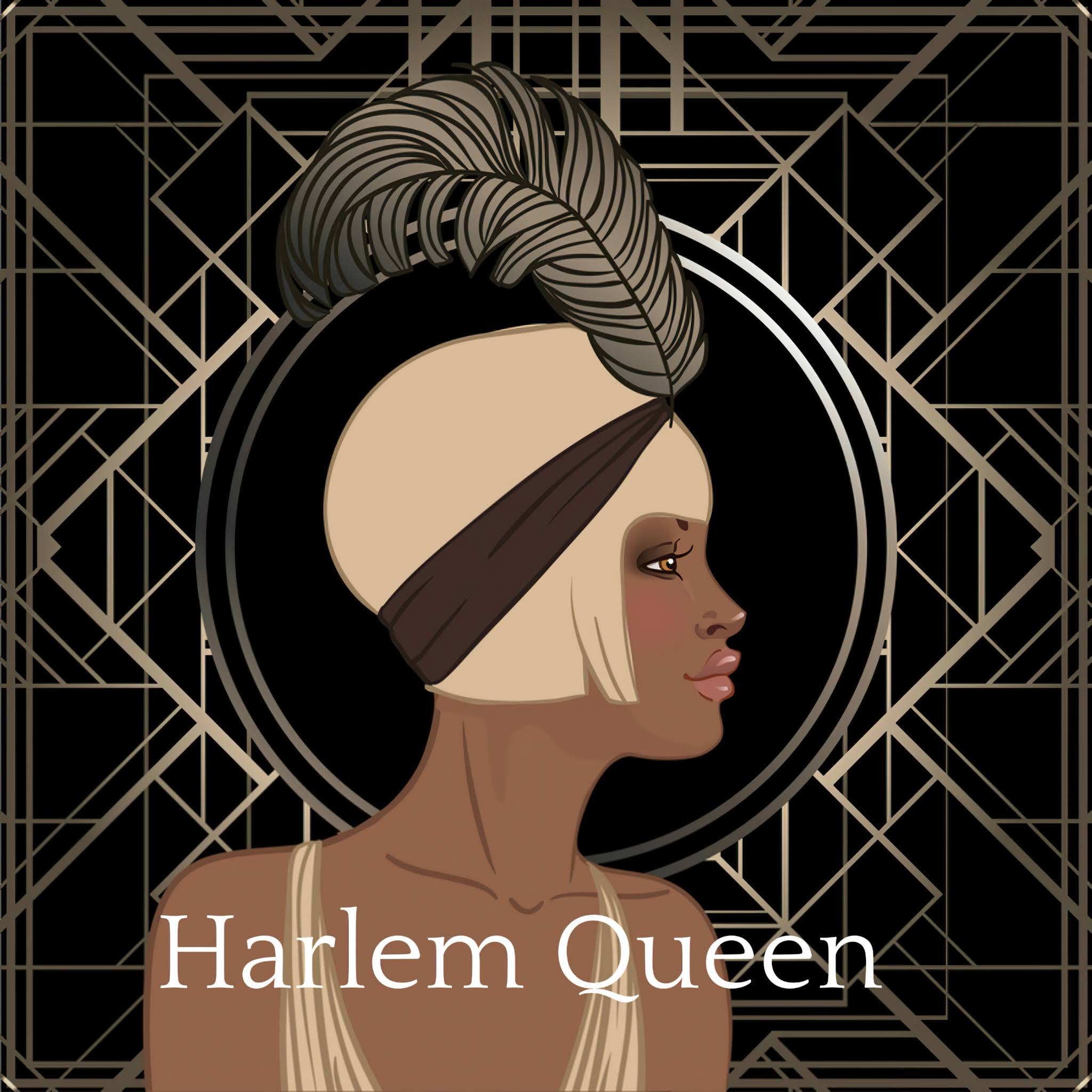
The Audio File: Harlem Queen

 As you may have gathered, I listen to a lot of podcasts, especially audio dramas. Having such a packed listening schedule means that it sometimes takes me a while to get around to certain shows. But, as the saying goes, good things often come to those who wait. That brings us to the audio drama that we'll be reviewing today. We're taking a look at Harlem Queen.


Harlem Queen takes place in the 1920s during the height of the Harlem Renaissance. Unsurprisingly, then, it is set in the Harlem neighborhood of New York City. It follows Madam Stephanie St. Clair. She ran numerous gambling institutions, which some might refer to as criminal enterprises, given that they operated outside of the law. She invested this money back into the Black community, and supported several Black artists and entrepreneurs.  She  was also a social activist who advocated for great equality for Blacks. The audio drama follows Stephanie's life as she keeps rival gangs, such as the Mafia, out of Harlem, and wrestles with her personal demons.

Harlem Queen is created Yhane Smith. It was funded by a grant from the Lower Manhattan Cultural Council. As I understand it, the grant was to provide money for works of art relating to the history of New York City, especially Manhattan. Thus, we have a wonderful historical fiction audio drama set in 1920s Harlem. It is great to see arts funds supporting quality audio dramas. We really need more of that. It would be really nice if Louisiana, the state I live in, had a similar program, but I'm not holding my breath on that one.

As I have already noted, this audio drama was well worth the wait. I'd never heard of Stephanie St. Clair before listening to Harlem Queen, but now I want to find out more about her. Apparently, many of her gambling operations we based around Policy Banks. I'm still not entirely sure what Policy is, but from what I've been able to gather, you place bets on numbers, and you have to get three right to win a prize. How much you bet is up to you, and you can do something where you win if you only get two, but you get less money. Also, you have people called Numbers Runners going around collecting people's bets, and telling everyone what the winning numbers are. Somehow this was able to generate wealth within the Black community. Again, I'm not entirely clear on how it all works.

You guys know I'm a sucker for historical fiction, so I was instantly draw to this audio drama. Interesting that Policy plays such a big role in the plot. Bronzeville, another historical fiction audio drama that also involves a highly successful Black community funded by Policy; albeit in 1940s Chicago, rather than 1920s New York. 

Anyway, back to Harlem Queen. The show being set during the Harlem Renaissance means that Stephanie runs shoulders with several notable Black writers and artists. For example, Langston Hughes appears in one episode at a gala that Stephanie is hosting. I love pretty much all the writers of the Harlem Renaissance, but I've always had a soft spot for the works of Langston Hughes, so I very much appreciated this.

In other cameos, at one point Stephanie has a brief chat with Zora Neale Hurston. Hurston is going back to her home state of Florida to collect the testimony of former slaves as part of a book she's writing. Though she can't think of a name for the novel at the moment. Stephanie suggests Their Eyes Were Watching God, but Zora dismisses it as too wordy; though she promises to give it thought. Joke being, that's the name she eventually settled on.

Season one's primary storyline involves Stephanie working to keep the Mafia out of Harlem. Besides protecting her investments, Stephanie does have altruistic reasons for this. The Mafia have made it very clear that they want to sell hard drugs in Harlem. Stephanie might run a Policy Bank, and isn't averse to indulging in a little alcohol, because Prohibition is in full-swing after all. However, she draws the line at things that are actively harmful, in a major way, to her community.

Overall, I greatly enjoyed season one. My only complaint would be that I wished there had been more episodes. Thus far, each season of Harlem Queen has only had four episodes. The episodes also tend to be on the shorter side, so each season clocks in at about an hour or so. Don't get me wrong, it keeps things brisk and moving along at a good pace. I just love the show so much I wish there was more of it.

To talk about season two, I should probably discuss something I've left out til now. Stephanie has an illegitimate daughter named Michele. Michele is light skinned enough to pass as white, but doesn't know that she is half-black, or that Stephanie is her mother. Stephanie used to work as a maid for a wealthy family in Guadeloupe. Her employer's son had a...less than consensual relationship with her, which resulted in pregnancy. So, she moved to Canada, and then to America to make a new life. That would explain her French accent, which I often wondered about during season one.

Stephanie wanted to give Michele a chance at a better life. So, Stephanie set her up at a fancy boarding school and constantly showers her with gifts. Stephanie takes a rather different view of the whole "Spare the rod and spoil the child" line from the Bible. Her assistant even notes this, saying essentially "You know, that's not how my daddy interpreted it."  It might seem odd that Michele could pass a fully white, despite being half-black, but genetics doesn't always do what you expect it will.

Of course, all of this does come back to bite Stephanie. Her enemies eventually figure out that Michele is her daughter and plot to kidnap her. Stephanie's quest to get Michele back, and struggling with if she ought to tell her the truth about who she is, forms the plot of season two. Stephanie also has to do all this without anyone else discovering the truth. On a micro level, Stephanie's deceit has caused Michele to become very racist against black people; though she does soften a bit by the end of the season. 

Also, there a scene where Stephanie is hosting another gala, and examples of black food include fried fish and gumbo. I always associate gumbo as being a Louisiana thing, and not strictly a black one. Do other states, especially Northern ones, eat it too? I suppose it could be a side-effect of the Great Migration. Help me out in the comments if you know.

Right, I should probably explain about the Great Migration. During the 1920s, Black Americans in the South faced a number of misfortunes. Institutional racism, a series of nasty floods, and various other things did not make it a good time to be Black. So, millions of Black people collectively threw-up their hands and said "Screw this!" and moved to the North en masse. Make no mistake, there was still racism in the North, but it was less overt, and more importantly, not enshrined in law, like in the South. This gave Blacks a genuine chance at upward mobility. This also lead to a flowering of black writers and artists, but we already covered the Harlem Renaissance.

The voice actors are all very talented. I don't know if they are professionals or not, but they certainly sound professional. Also, I just love how each episode opens with an old timey radio announcer setting the stage for the episode.

All in all, season two is a worth follow-up to season one. Season three continues the momentum, and I can't wait to see what season four has in store for us. Well, I don't think I really have much more to add. Harlem Queen is another great historical fiction audio drama, and you should listen to it as soon as possible. You can binge the whole thing in about three hours. Though, fair warning, after that you'll be hungry for more.

Well, I think that should do it from me for now. I will see you guys next time.

Thursday, August 20, 2020

The Audio File: Visionaries: Season 1

 If you've been following my last two editions of The Audio File, then you'll know the drill by now. I'm happy to help anyone who ask me to review their audio drama podcasts. However, I also maintain a policy of strict honesty, and I won't hesitate to critique any elements that I think aren't working. I don't really have any more to add, so let's jump right into it. We're taking a look at season one of Visionaries


Visionaries takes place in the post-apocalyptic future of 2185. Humans have evolved various superpowered abilities. What these abilities are depend on what eye-color you have. Hence, these powered individuals are known as Visionaries. However, not all humans managed to evolved powers. These powerless individuals are known as Dead Eyes. Dead Eyes are kept as slaves by the Visionaries. This is how it has been for years, but all of that is about to change. The Dead Eyes are about stage a revolt against the Visionaries. But they aren't doing it alone. Rumor has it that a Visionary is leading them. 

I had heard about this show before, and I'd been meaning to listen to it. What finally got me around to it was when I was contacted by Visionaries series creator Richard Seneque. He discovered by reviews from the r/audiodrama subreddit. In particular, he enjoyed my reviews of Lights Out and Sticks Shift Incorporated. I said I'd be happy to take a look at his podcast, and now here we are. 

On the technical aside of things, this is a very well produced audio drama. The audio is very slick and professional sounding. The audio is the same high-quality sound you would find in any professionally produced audio drama. The actors as also quite talented. I don't know if they are professionals, but they certainly sound professional. The sound effects and music are well done, and there's plenty of them, which keeps the audio drama properly immersive, and contributes to the professional feel of it. 

Another aspect I liked was how the narrator will describe the scenes and the action. It reminds me of various recorded plays I have listened to, mostly stuff written by Shakespeare and Sophocles. They too will feature narrators who describe the action for the benefit of the listening audience. It is good that it reminded me of those plays. Fall of the Shah did something similar due to it nature as a docudrama. It also reminds me of those podcasts that adapt prose short stories into audio. Honestly, descriptive narration is something I miss from those short story podcasts, and I wish more audio dramas would consider incorporating it. There's certainly a lot that a little bit of descriptive narration can add to an audio drama. 

Okay, I put it off as long as I can so let's get to it: the podcast has more than a few issues. Let's start with the setting. The premise makes this sound like the audio drama is going to be a science fiction adventure, but it wound up being fantasy. The powers of the Visionaries are pretty much magic in all but name. There's some official artwork on the podcast's website that depicts Seer's Rock, one of the settings of the series, as a medieval-style castle that wouldn't look out of place on the cover of a fantasy novel. The names are the  characters also wouldn't be out of place in a fantasy novel. This podcast feels much more like a fantasy that was wearing the skin of a science fiction podcast. 

Now, to be fair, the audio drama's website does specifically describe Visionaries as a fantasy podcast. And I wouldn't have minded that if Visionaries didn't bill itself using clear science fiction elements; such as the setting being a post-apocalyptic future, or the Visionaries' powers being explained by evolution. When you include stuff like that, it creates certain expectations within your listeners. So, when your podcast then turns out to be fantasy, it kind of feels like false advertising. It would have been better, I think, if the podcast had gone the full nine yards and set itself in a separate fantasy world.  

We get some hints and justification about why the world has reverted into a quasi-medieval fantasy world. There's mention that there was a World War III, and that the Visionaries banned pretty much all advanced technology because they didn't want another war. Well, that's what they say at any rate. I suspect the real reason for the ban was because technology might put Dead Eyes on equal footing with Visionaries. 

The setting just felt reminiscent of at least a dozen or so young adult fantasy novels, which aren't something I typically seek out of my own volition. Which is interesting, as I've always felt that those novels were just re-skinned young adult dystopias. Oh, science fiction dystopia, especially ones like The Hunger Games, might not be as common as they once were, but fantasy young adult, especially ones set in secondary fantasy worlds, often hit a lot of the same beats as young adult dystopia. Oppressive ruling classes, generic badass (usually female) protagonist, love triangle, getting cool clothes at some point, rebellion to overthrow the oppressive kingdom, deadly challenge or quest that must be completed, it's all there. 

I should add that Visionaries doesn't follow this formula as slavishly as other examples I can think of. For example, we have a male protagonist, no love triangle, no quest beyond the rebellion. 

The worldbuilding felt like it left something to be desired. It felt like I was being plopped in the middle of the story without being given much to go on beyond the whole slave revolt angle. This is particularly bad given the aforementioned use of the narrator. Give me a sense of this world; descriptions of clothing, food, social customs. I suppose it is possible these things are being saved for future seasons, but I still found their absence annoying. 

Richard has said that he intended Visionaries to be a commentary on racism and discrimination. Essentially, what if we discriminated people based on eye color, rather than skin color? If this is meant as allegory, well, then we have some issues. Let's have a brief refresher on terms. Allegory is a form a storytelling where everything in the story is meant to be a stand-in for something else. Applicability, by contrast, is where a story can be interpreted numerous way because it is written in such a way that it could apply to numerous things, even those the author might not have known about. If we interpret Visionaries as an allegory, then we have a problem. 

In our world, white supremacists claim that whites are inherently superior to other races, despite there being no evidence to support such claims. In the world of Visionaries, the Visionaries claim to be superior to the Dead Eyes...and they're absolutely correct. Yeah, doesn't really work as an anti-racism allegory. However, if we take the audio drama as applicable, then we could see it as applying to discrimination against the physically handicapped, but also having some elements of racial discrimination. Applicability would also work because Visionaries don't seem to care much about skin color anymore. Though, as mentioned, that just means they focus on eye color. The official artwork does seem to show the slaves as multiracial. They also look like they got lost on their way to a Mad Max themed BDSM club, but I digress. 

As for the characters, I struggled to keep track of who was who, which is never a good sign. I just didn't find that any of them really made much of an impact on me. I'd also like to take a moment to clarify a point. I know it sounds like I've been ragging on the official artwork, but I actually think it is quite good. It looks like something you'd find in a high-quality indie comic. Besides the castle and the slaves,my of get to see what the different colored eyes look like. 

Look, I need to be perfectly honest with you guys. This isn't the sort of podcast I'd normally seek out: especially after I realized just what kind of podcast this really is. It's not that I'm opposed to this kind of fantasy. The Two Princes is set in a fantasy world, and I very much enjoyed it. Though, it took a considerably different tone than Visionaries does. 

Now, that having been said, I must give Visionaries the benefit of the doubt here. I still encourage all of you reading this to checkout Visionaries. It might not have been my cup of tea, but maybe it will appeal to you in was that it doesn't for me. At the end of the day, it is important to try things for yourself. It didn't matter what other people say or think about an audio drama, what matters is what you think, even if that goes against the consensus. I give you all full permission to like things I don't like, and to dislike things I do like. I will not hold it against you. 

In sort, listen to Visionaries and decide what you think about it yourself. Season one is only five episodes long, and the episodes themselves aren't very long in length. You can easily binge it in one sitting. So, even if you don't like it, you won't have lost too much time. 

Well, I think that covers everything for now. I will see you guys next time.