Monday, August 22, 2022

The Audio File: Earth Eclipsed

I really can’t think of any way to introduce this review. As such we’re going to skip the preamble, and jump directly to the main point. We’re taking a look at Earth Eclipsed


Earth Eclipsed takes place far in the future. Humanity has spread to the stars and colonized the galaxy. This galactic community, known as the Human Concord, is a shining utopia. There is peace and prosperity across all the worlds of the Concord. Dr. Alexine Prometh is the head of the Abacus Project. The Abacus Project aims to find a way to extract and display memories. Dr. Prometh has become a bit of a celebrity because of her work. However, all is not well. Alex soon finds herself captured by an anti-Concord terrorist named Nico Dunn. Nico claims that the Concord is built on a foundation of lies, and its prosperity has come at a steep cost. Dr. Prometh is about to go on a wild ride that will challenge everything she thinks she knows.

I think it is important that I disclose a few facts before we go any further. Earth Eclipsed is created by The Lunar Company. It was founded by three Brazilian guys named Victor Lee, AJ Churchill, and Nicholas Prufer. Earth Eclipsed was their very first time making an audio drama, but they wanted to do more for the world of audio fiction. To that end, they founded Apollo. Apollo is an app designed exclusively for fiction podcasts. It is, I will concede, far from perfect. However, they are working round the clock to iron-out the flaws. They have some very big plans for the future, and I certainly look forward to seeing where they go in the future. And yes, the name Apollo is a reference to the Apollo missions from the Space Race. The characters of Earth Eclipsed often call each other lunar when someone is acting crazy or insane. So, it’s a fun little bit of consistency in branding.

Why am I telling you all of this? Well, Apollo was in need of a social media manager and head of community. To be clear, both of those are one job. I saw The Strata quote tweet Apollo’s call for applications on Twitter. Apollo was looking for someone who lived, ate, and breathed audio fiction. So, I thought to myself “Okay, that sound like something I might be good at.” I sent in my resume, and the next thing I knew, I had scheduled an interview of Victor Lee. I aced the interview, and made it to round two. Making it to round two put me in the top ten percent of all applicants. So, next interview was with AJ. I didn’t do quite as well this time, but I tried my best. Ultimately, the role went to Wil Williams. For what it’s worth, Victor said that there were over 300 applicants, and I was among the most impressive.

I like what Wil has done in the role. I’m particularly fond of the “guess the audio drama from the emojis” game they’ve implemented on Twitter. They gave me good tips on quality, and affordable microphones. And I’m eternally grateful to them for helping promote Residents of Proserpina Park’s season three Indiegogo campaign. Quick side note, please donate if you are capable of doing so.

I have maintained good relations with Apollo, and they even commissioned me to created three curated lists of recommendations for the app’s homepage. I was paid fifty dollars per list. If you’re curious, the ones I made were the For Kids, Exceptional Anthologies, and Sci-Fi: Beyond Infinity lists. In fact, I’m told I might to commissioned again in the relatively near future. Now, obviously, I did find Earth Eclipsed via Apollo. I mean, it is kind of hard to miss on the homepage. And if I’m being honest, I was curious to see what it was like for myself.

I went on this spiel because I wanted to be upfront about my connections to Apollo. But having said that, I’m going to judge Earth Eclipsed just as I would any other audio drama. That which is praiseworthy shall receive praise. Anything that I feel is a bit lacking will shall also be noted as such.

Let’s start with the positives. This is The Lunar Company’s very first audio drama, and it certainly starts out of the gate strong. The soundscaping and music are incredibly cinematic. It is easily on-par with anything you might find from a big budget audio drama. AJ Churchill handled the music, and did the sound design along with Shane Rutherford-Jones. You can tell that both of them are no slouches when it comes to working with music and sound. It liked how the music helps paint a picture of the world of Earth Eclipsed. Scenes set within the Concord feature a lot of electronic and mechanical sounding music. Meanwhile, the Outer Worlds feature more acoustic sounding music. You get an emphasis that the Concord is full of many technological wonders, but is also a very regimented and controlled place. It also didn’t escape my notice that the anthem of the Concord sounds suspiciously similar to the national anthem of the Soviet Union. By contrast, the Outer Worlds feel more organic and pastoral.

Earth Eclipsed also has a great justification for being in an audio-only medium. Dr. Prometh gouges out her eyes are part of her work on the Abacus Project. She theorized that pervious memory retrieval attempts failed because the test subjects were overwhelmed by visions of the memories. So, she got rid of the problem by getting rid of her eyes. Concord biotech can easily regenerate lost body parts, including eyes, so this is only a minor inconvenience. Of course, there is the minor snag of getting kidnapped by Nico. So, in a way, we are experiencing the story through Dr. Prometh’s point-of-view, or lack there of.

Speaking of Nico, his ship is call the Gungnir, which is the spear of Odin in Norse Mythology. That’s interesting, because Odin sacrificed one of his eyes to drink from the well of Mimir, and gain knowledge. Rather like how Dr. Prometh sacrificed her eyes in the name of the Abacus Project. Dr. Prometh’s name is an obvious nod to Prometheus; the titan who stole fire from the gods, and gave it to humanity, in Greek Mythology. I can’t really think how that relates to Earth Eclipsed. I’m also not entirely sure what the series title means. It is mentioned that nobody remembers where Earth is. In fact, some people believe that Earth is just a myth. Perhaps it is a reference to how Earth has become eclipsed in importance by the Concord?

The voice actors are all really great. I feel like I’ve heard Nico and Dr. Prometh‘s voice actors somewhere before, but I can’t think where that would have been. I also really love how the Earth Eclipsed website is designed. The episodes all have transcripts, which is very important, as I emphasized in my reviews of Seen and Not Heard and Main Street Mythology. However, each episode’s section also includes a glossary of term. Just click on a term, and a helpful pop-up explains what it means. That was a really nice touch, and quite helpful for a show with a lot of in-universe jargon.

Okay, now for a few things I thought could use improvement. I felt that the first half or so of the series could have done a better job establishing in characters and their world. I felt that it didn’t properly explain why I should care about the characters. I will say that this does improve as the series goes on. I’d say that episode six was where Earth Eclipsed finally found its footing. That part where the Gungnir is trying to escape the gravitational pull of a star had me hooked. Now, I was willing to ride the first season out, and my patients was eventually rewards, especially with regards to the final two episodes. However, not all listeners may be so forgiving. It is always important to try to get your audience hooked within the first few episodes, or they might not stick around.

I feel that the first few episodes don’t really introduce you to the world and characters of Earth Eclipsed, so much as throw you at them. I felt like I got thrown in the deep end without swimming lessons. I would compare this to The Culture series by Iain M. Banks. Consider Phlebas is the first novel in the series, but The Player of Games is generally considered a much better introduction to the world of The Culture, despite being the second novel. It helps that the novels can be read in whatever order you please. I started with The Player of Games, and I can safely say that was the right decision. Consider Phlebas doesn’t really establish who The Culture are, and why you should care. Probably doesn’t help that The Culture are actually the antagonists for most of that book. I don’t know if anyone on the Earth Eclipsed crew have ever read any of The Culture novels, but I think they would like them quite a bit.

Now, granted, I do understand why Earth Eclipsed was a bit coy with its worldbuilding and characters. It relates to the central mystery of the season. The series takes its time slowly pealing back the layers. But, with that, we now need to get into the spoilers.

So, if you don’t want any spoilers, turn back now.

Last chance, you sure you want to continue?

Okay, if everyone who wants out is gone, let’s get into it.

So, we finally get to Nico’s home planet of Sogen. It used to be an idyllic pastoral world. We learn that they had a big debate about whether or not to accept genetic engineering technology from the Concord. After much debate, Sogen rejected the genetic tech, preferring to keep their kids just the way they were born. However, the Concord considered this an unacceptable answer, and attacked Sogen.

It is clear to me that Earth Eclipsed has something it wants to say, but I’m not sure what that something is. We don’t really get any solid arguments for why genetic engineering is bad. Sure, we get some hints that unmodified people are looked down upon, and subject to prejudice. However, the primary argument seems to be that genetic engineering is unnatural. Okay, but under that logic, open-heart surgery, vaccines, dentistry, and two dozen other routine medical procedures are also “unnatural.” Meanwhile, infectious disease, crude oil, and wild fires are all, technically speaking, perfectly natural. Point is, natural is not inherently good, and unnatural is not inherently bad. Personally, I think natural is a word that is overused and poorly understood.

Now, there are certainly arguments both for and against genetically engineering humans. Some people argue that eliminating conditions such as depression, schizophrenia, and anxiety might deprive us of geniuses. After all, many geniuses and innovators suffered from mental illness. But answer me this: are they geniuses because they suffer, or in spite of the fact that they suffer? I would argue to the later. But I also concede this isn’t an entirely black and white question. What about eliminating disorders such as autism or dyslexia? These conditions can be a burden, especially for lower functioning individuals. However, these conditions often grant unique insights and ways of thinking to those who process them. And moreover, should society put emphasis on “normalizing” neurodivergent people? Or should it emphasize accommodating them, and treating them with kindness and compassion?

From my own experience, I can very much remember my school days, where I was constantly pressured to be more “normal.” But as the years went on, and after I left grade school, I saw attitudes shift towards society becoming more accommodating to those who fall outside the norm. Personally, I would not want to take any procedure that would render me neurotypical. Autism is all about how the brain is structure, and a change that radical would totally rewrite everything about me. In essence, it would be as though I had died, as I would be a completely different individual.

As you can see, there’s a lot of fertile ground to debate the merits of genetic engineering. However, you won’t find any of them in Earth Eclipsed. Though, this is slightly mitigated by the implication that the Concord is using genetic engineering to make its citizens more obedient and docile. Dr. Prometh’s faith in the Concord boarders on religious fanaticism at times. Interestingly, traditional religion seems to have largely died out in the future of Earth Eclipsed. The closest thing is how citizens of the Concord seem to view the government with reverence and devotions. They even swear in the name of the Concord. It almost reminds me of North Korea’s Juche ideology. Some people claim Juche isn’t a religion, but I’d argue it ticks off most of the major boxes.

Also, on a side note, where are the aliens? All lifeforms seems to come from Earth. Humans are the only intelligent species, and even the animals and plants are all imports from Earth. Were all of the planets originally lifeless rocks that had to be terraformed? Or did there used to be aliens, but the Concord killed them, and then covered up their existence?

The creators of Earth Eclipsed have said that they created the series to explore various ideas. Amongst other things, that it is our imperfections are what make us human, the importance of individuality, and fighting back against totalitarianism. Well, I did get that last one, but I feel that the other two themes weren’t articulated as well as they could be. I felt that the first half of the season struggled to find its footing. However, the second half are where things really kick into gear. Episodes six, seven, and eight are where the series really hits its stride.

It felt like season one was a bit of an extended prologue. Okay, so we’ve got everything set up now. Let’s see where Earth Eclipsed goes in future seasons. The keyword with Earth Eclipsed is potential. It is clear to me that everyone involved with the show is very talented, and there world they have created has a lot of promise. Season one was a pretty good prologue, but let’s see what you can do now that you have all of the pieces on the board.

Of course, it might be a while before we get season two of Earth Eclipsed. Obviously, ironing out the Apollo app’s kinks take top priority for the moment. Personally, I wouldn’t have it any other way. If the Apollo team can get the app stabilized, and expand upon its features, I think they could have a potentially hot property on their hands. Potential is also the keyword when it comes to Apollo. There’s some very bright things on the horizons at Apollo, and I can’t wait to see them all.

Okay, so what’s my final verdict on season one of Earth Eclipsed? Well, it starts off a bit rough and disjointed, but it managed to stick the landing in the end. I would remind regular readers of this blog that The Program Audio Series also started out a bit rough, but it managed to soar higher and higher once it found its footing. So, I’m going to give a tentative thumbs up to Earth Eclipsed, provided that season two keeps up the momentum.

Well, I think that should do it from me for now. I will see you guys next time.

Thursday, August 18, 2022

The Audio File: Friday Knight Fights

I’ve had a lot of obligations and prior commitments as of late. However, I’ve finally got a temporary gap in my reviewing schedule. As such, we get to review an audio drama I’ve had my eye on for quite some time. We’re taking a look at Friday Knight Fights


Arthur Padron was just an average teenager trying to enjoy his gap year before college. Then he met a girl named Lynn, and touched the magic sword she had with her. Arthur soon discovered that he is the modern-day reincarnation of King Arthur himself. Lynn turns out to be the reincarnation of the great sorcerer Merlin, and the sword is Excalibur itself. They’re also joined by Elliot, who is the reincarnation of Lancelot. The modern reincarnations of the Knights of the Round Table are scattered across modern-day America. Arthur, Lynn, and Elliot must set off on a cross-country roadtrip to recruit the reincarnated knights. However, though magic is returning to the world, so too are dark forces. It’s sure to be an adventure of Arthurian proportions.

I first became aware of Friday Knight Fights from the weekly new releases thread on the r/audiodrama subreddit. The premise sounded interesting, so I decided to give it a try. I enjoy urban fantasy, and I enjoy Arthurian Legend. There have been a few other works that utilize the premise of Arthurian characters reincarnating in the modern-day. However, it is not how many times a premise has been done, but how well you execute it, that truly matters. Personally, I’d say that Friday Knight Fights did a pretty good job handling its premise.

Season one is split into two alternating parts. One part takes place during everyone’s freshmen year at college, while the other takes place one year earlier, and shows how everyone met. Each episode will features scenes relating to both plot lines. Usually, the freshmen year plot line starts off the episode, and then we transition to the one year earlier plot line. Also, in case you’re wondering, the sword on the cover art is Excalibur, and the red threads are the red threads of destiny. 

The title of the series is obviously a reference to the movie/television series Friday Night Lights. Admittedly, I have seen either that movie or the television series, but I’ve heard good things about them. So far, Arthur hasn’t become part of any football team. Of course, as uncoordinated as Arthur is, that might be for the best. I also get some hints that anime might have been influence on Friday Knight Fights. Some points, usually halfway through the episode, there will be little bumpers where the name of the series will be accompanied by some dramatic music. Animes frequently do that as well; off the top of my head, Fullmetal Alchemist: Brotherhood, KonoSuba, and The Way of the House Husband all do that. Come to think of it, the general plot of Friday Knight Fights wouldn’t be too out of place in an anime.

Now, let’s talk about the voice acting and should design. One of the biggest strengths of Friday Knight Fights is its absolutely stellar cast. I could tell from my first listen that the cast were all extremely talented and hard-working. I don’t know if any of them have prior experience in voice acting, but I see very bright futures for them all. Now, having said all of this, I need to do a bit of tough love. The audio quality, while overall passable, can have some noticeable inconsistencies at times. There will be sometimes when characters will have a noticeable background hiss accompany their dialogue. Also, there’s always a little bit at the end of each episode, after the credits, that feels like it was incidental recordings left in by accident. So, definitely want to even out those audio levels and remove that background hiss.

Scenes that involve a lot of action will often music and sound-effect. This is good, and I very much support this. You also sometimes get this in incidental scenes. For example, there’s the scene where Arthur and Elliot go on a shopping spree in the style of a 1990s rom-com movie. I do feel that maybe more of the less dramatic scenes would benefit from a smidge more ambient noise, and perhaps even a bit of music at times.

Speaking of music, let’s not forget them theme music. Overall, I do enjoy the theme music. It reminds me a bit of the theme music from the audio drama Red Rhino. Though, to my knowledge, nobody from Friday Knight Fights was involved with Red Rhino. So, it could be coincidence. I could never get into Red Rhino, unlike Friday Knight Fights. My biggest compliant is that Red Rhino was so busy trying to be metafictional and post-modern it forgot to tell an actual story. Thankfully, Friday Knight Fights does not have that issue. I also liked how the theme music played alongside the finals scenes of the season one finale. It reminds me of how certain animes also do that.

Now, let’s shift gears and talk about the characters. Arthur is a complete and utter dork who often trips over his own feet. Oh, he might attempt to look cool, but he often just makes an even bigger fool of himself. The Knights of the Round Table, and especially Lynn, frequently rib him and poke fun at his expense. All of the being said, as the series progresses, Arthur slowly grows into a competent leader. His plans and battle tactics are, more often than not, genuinely good and well thought out. We get hints of the king he will one day become. However, he’s still got a long way to go before he’s ready to measure up to the legends. But for all his dorkiness, he’s still endearing, and we want to see him succeed. Arthur is voiced by Ian Kennedy.

Lynn is Arthur’s left-hand woman. The position of right-hand woman has been filled by Elliot. That being said, Lynn does not spare Arthur any snark and sarcasm. In fact, she’s often the one who instigates it. But when the chips are down, she’s always there for Arthur. Lynn, being the reincarnation of Merlin, is quite skilled in magic. However, she’s even more adept when it comes to modern technology, particularly computers and hacking. However, she insists that her hacking skills don’t have anything to do with magic. In fact, her hacking skills are how she was about to track down Arthur and the Knights. Oh, and Lynn also shops at Hot Topic, but she’s mildly embarrassed about that. Lynn is voiced by Charlie “Rat” Sutton.

Elliot is the reincarnation of Lancelot. She has a sunny disposition, and is almost always bubbly and cheery. She has her occasional moments of ditziness, but that just makes her get along with Arthur even better. In fact, much like their medieval counterparts, they get along famously. Of course, if you know your Arthurian Legend, you’ll know that Lancelot had an affair with Queen Guinevere, which set off a series of events that eventually lead to the downfall of Camelot. Oh, but don’t worry, Elliot had promised that she won’t sleep with Arthur’s wife. Well, Arthur is currently single, but the point still stands. Elliot is voiced by series creator Ashton Lorelle. When I first started listening to Friday Knight Fights, I assumed that Ashton was exaggerating her accent. Elliot sounded almost stereotypically Southern at times. However, if the pre-show ads are anything to go off of, that’s apparently more or less how Ashton actually speaks. Of course, I’m not really in a position to be remarking on that sort of thing. Nobody who hears me speak ever guesses that Shreveport, Louisiana is where I’m from.

Anthony is the first Knight that Arthur, Lynn, and Elliot find. He is the reincarnation of Tristan. Anthony is…uh, cool, like, a really nice guy. Okay, I’m just gonna be real with you guys. Anthony kind of gets outshone by the more colorful members of the cast. If they were the Avengers, he would be Hawkeye. Anthony’s primary character arc revolves around finding out who Princess Isolde reincarnated as. We’ll get into that once we get to the spoilers section.

I think Gerry was easily my favorite character. He is the reincarnation of Gawain. Gerry’s fully name is Gerard Butler. No, not the one you’re probably thinking of. Gerry is the life of the party, but he has a very laidback and chill. He also usually the one who organizes parties. He sounds like one of those people who is dumb as a brick, but also completely lovable. The only thing Gerry truly hates is the color green. This is an obvious nod to the legend of Sir Gawain and the Green Knight. Gerry loves to party, but he loves his mommy even more. In fact, Gerry initially doesn’t want to go to college if it means be away from his mom. Gerry is voiced by Tyler Gonelli, who also handles the music and sound design for the series.

Arthur has a cousin named Carlos. Unsurprisingly, Carlos turns out to be the reincarnation of Kay, who was King Arthur’s stepbrother. Well, in some retellings anyway. Lynn mentions that not all retells of Arthurian Legend are accurate. Personally, I thought that Friday Knight Fights had a pretty brilliant explanation for the inconsistencies within Arthurian Legend. The characters have reincarnated over the centuries. So, it isn’t that the chroniclers were being inconsistent, or changing details, they were recording different incarnations of the Arthurian characters. That also handily explains why the Arthurian Legends don’t mesh with the archeological record of 5th Century Britain. Stone castles, knights, and countless other iconic Arthurian elements hadn’t been invented yet in the 5th Century. Carlos is voiced by Mateo Rodriguez.

The exact number of Knights of the Round Table varies from legend to legend. On the low end, some source say there were only twelve. On the higher end, however, other sources claim there were anywhere from 150 to over 300. I bring this up because there’s a lot of obscure Knights out there. Oh, sure, you’ve heard of Lancelot and Percival, or maybe you’re familiar with Gawain or Bedivere because of English class. But have you heard Sir Lucan the Butler? I should mention that, in this case, butler doesn’t mean what it does in modern times. A medieval butler was someone in charge of the royal household and royal court. As such, Lucan was on par with Knights such as Kay and Bedivere.

I bring all of this up because Arthur and the gang eventually meet a girl name Lucy, and she is the reincarnation of Lucan. She’s not to thrilled about being The Butler. I suppose she wasn’t paying too close attention to the visions of her past lives. Lucy is the daughter of the dean of the university everyone eventually decides to go to. Said university is famous for its medieval studies program, and the town around the university has a lot of Arthurian themed shops and cafes. Lucy initially seems like she’ll be a spoiled mean girl character, but she turns out to be pretty nice. Lucy is voiced by Sydney Jones

Okay, so what if one of the reincarnated Knights doesn’t want to relive the old legends? Oh, don’t worry, we get our answer in the form of Poppy. She’s the reincarnation of Percival. She initially doesn’t want to get involved, but she comes around with time. Though, she does make Arthur promise that they’ll actually change things this time round, and won’t just repeat the old stories. Poppy gets along quite well with Lynn, especially when it comes to messing with Arthur. Also, Poppy wears glasses, and is basically blind without them. As an aside, I love that Poppy’s episode took place at Medieval Times Chicago. I went to Medieval Times Dallas for a field trip in sixth grade. Sure, Medieval Times plays a bit fast and loose with actual history, but it is tons of fun. I had an absolute blast, and would gladly go again if I ever got the chance. Poppy is voiced by Hannah Steele, who also acts as director and co-writer for the series.

Rounding out the cast is Delilah. She is the reincarnation of Bedivere. Delilah loves volunteering for just about everything. She even volunteers as part of a Catholic church choir, despite the fact that she is Jewish, and is raised by two gay men. She’s no slouch in a fight. In fact, she picked up quite a few self-defense skills from her time volunteering various hospitals. Arthur found this out the hard way. To be fair, he did kind of come across as a creep. He lured her into one of the church’s back rooms and ask her to touch his sword. He meant Excalibur, since touching it is how everyone gets memories of their past lives, but that’s not how Delilah interpreted it. Carlos has a crush on Delilah, and its hinted that she returns his feelings. Interestingly, in the original legends, Kay and Bedivere were quite close. Delilah is voiced by Strummer Steele.

Okay, now we’re getting into the spoilers. If you don’t want any of that, turn back now.

Last chance. You sure you want to continue?

If everyone who wants out is gone, let’s get into it.

Okay, first things first, Anthony’s love quest. The love quest ends in a way Anthony didn’t expect, but I certainly wondered about. Many of the male characters from the original legends were reincarnated as girls. So, it would stand to reason that at least some females characters are boys this time round. Well, it turns out I was right. Isolde has been reincarnated as a boy named Sawyer. Anthony initially doesn’t take that well. Though, he also admits he hasn’t really given much thought to his sexuality. One talk with Gerry later, and Anthony has patched things up with Sawyer. I’m not opposed to Anthony coming around to loving Sawyer, but I felt like things moved a bit too fast. At times it almost reminded me of the part of Spamalot where Lancelot discovers that he is gay. Or maybe Gerry is just that good? He’s not too bright, but he does have excellent people skills.

In other relationships, Arthur and Elliot become a couple. I had kind of suspected that this might happen. I thought that, instead of having with Guinevere, Elliot would have an affair with Arthur. Though, Arthur hadn’t found Guinevere yet at that point. We also know that something bad happened with Elliot the pervious year. She had considered tossing Excalibur into the lake where Lynn first found it. Did she try to go through with it? But then another thought occurred to me. What if Elliot wasn’t who she claimed to be? What if, somehow, she was Mordred, but wanted to be good this time around? But no, it couldn’t be, could it? How would she hid something like that from Lynn?

Well, lo and behold, I was half correct. The person claiming to be Elliot was indeed Mordred, though she prefers to be called Dread this days. However, she’s just as evil as she was in the original legends. Also, she’s the one who gave Lynn in info on how to find the Knights. It was all according to Dread’s scheme. I mean, I suspected this might be coming, but still, damn. Wait a minute, Mordred was Arthur’s son in the original legends so…oh no! Arthur was in a relationship with his reincarnated son! I mean, they aren’t biologically related, but still. Well, that’s going to make season two very interesting.

Oh, and Arthur found his Guinevere. She’s a girl he had a crush on name Winnie. Yeah, I saw the one coming a mile away. Most of the characters have names that are evocative of their Arthurian counterparts. Lynn is Merlin, Lucy is Lucan, Gerry is Gawain, Poppy is Percival, and Arthur is…well, you know. I would have been more surprised if Winnie hadn’t turned out to be Guinevere. I saw it coming, but that’s not a bad thing. It will be interesting to see how Winnie interacts with the rest of the cast come season two.

And from the looks of it, season two is going to be even more amazing than season one. We now know how the gang meet each other, and who the villains they’re up against are. Personally, I can’t wait to see what adventures we’ll be going on in season two.

So, there you have it. Friday Knight Fights is a modern-day urban fantasy adventure of Arthurian proportions. It follows characters from Arthurian Legend being reincarnated a modern-day college students. Season one was really great, and I eagerly await to see what season two will bring. From the looks of things, it will be just as great, if not even better.

Well, I think that should do it from me for now. I will see you guys next time.

Monday, August 8, 2022

The Audio File: Live From Mount Olympus: Persephone

It is always exciting when an audio drama puts out a new season. Especially so when you aren’t sure if the new season was on the way. Well, I don’t really have much more to add, so let’s get directly to it. We’re taking a look at season two of Live From Mount Olympus


Persephone is a young goddess with a reasonably good life. Her half-sisters Athena and Artemis are her best friends, her parents Demeter and Zeus love her, and she’s a fairly talented artist. And yet, she feels that she doesn’t know who she really is. She worries that she isn’t pretty, and that she has no identity beyond being Demeter’s daughter. But that’s not Persephone’s only problem. She’s been swallowed by a hole in the ground, and now finds herself in the underworld. Apparently, Zeus offered her hand in marriage to Hades. Persephone must journey through the underworld to discover who she really is. Meanwhile, Demeter will search high and low for Persephone. She will do whatever it takes to get her daughter back, no matter the consequences.

I had been hoping that Live From Mount Olympus would be getting a second season. As you might recall, I absolutely adored season one of Live From Mount Olympus. There’s plenty of stories from Greek Mythology that would make for great adaptions. Lo and behold, Live From Mount Olympus put out some bonus mini-episodes, and announced that a seconds season was on the way. The only hint was that it would involve a female character as the protagonist. Who could it be? What myth would be adapted? Psyche and Eros? That one had a happy ending, which is fairly rare for Greek Mythology. Atalanta, perhaps? But the ending of that one is bittersweet at absolute best. Didn’t seem like the sort of thing Live From Mount Olympus would go for.

But what if it wasn’t anything about mortal heroes? What if it involved the gods and goddesses? Sure enough, it turned out to be an adaption the Persephone and Demeter myth. Well, season one turned out pretty great. So, I had full confidence that season two would live up to its predecessor. It would seem that my faith was certainly not misplaced.

As I noted in my review of season one, Live From Mount Olympus is all about filling in the gaps. The original myths don’t offer much in the way of introspection. Characters will do things, but we don’t really get insight into their inner thoughts, and there’s not much in the way of dialogue. Point being, there’s a lot of wiggle room, and room for creativity, when it comes to adapting myths. For example, while the myths never say that Persephone hung out with Athena and Artemis, there’s also no evidence against it. The dialogue is modern, but feels natural, and never comes across as trying too hard to be hip and cool.

Persephone is also more assertive, and isn’t just some damsel in distress like in the original myth. She has adventures exploring the underworld on her own, and this is a big part of her character arc. She gains confidence and learns to embrace her new role as the queen of the underworld. She learns to see her new role as a chance to finally step out from her mother’s shadow. Persephone also makes some changes to the underworld. Prior to her arrival, all shades drink water from the River Lethe. It makes them lose their memories, and Hades believes that this will help them adjust to life in the underworld. However, Persephone convinces Hades that it might be better to let some shades retain their memories of life. Technically, this isn’t really part of the original myth, but it was a nice addition. I’d say there’s enough wiggle room that we can let it slide.

I really liked how Hades was portrayed. It is depressingly common for works that draw upon Greek Mythology to portray Hades as, basically, Ancient Greek Satan. In actual mythology, however, he was stern, but ultimately fair and reasonable. Death comes for us all sooner or later. Also, unlike Zeus and Poseidon, Hades only had a grand total of two affairs. In both cases, his lovers were turned into plants by Persephone. Of course, this is Live From Mount Olympus, so, naturally the writing is going to portray Greek Mythology accurately.

Hades is shown to be a very kind, sensitive, and introspective. He isn’t forceful with Persephone, and allows her take her time getting acclimated to the underworld. He also willingly let’s Persephone return to the land of the living after she learns how bad things have gotten in her absence. Persephone and Hades’ relationship progress realistically. Persephone doesn’t instantly fall for Hades, and still isn’t head-over-heels for Hades by the end of the season. However, she has grown to enjoy spending time with Hades, and is eager to continue to help improve the underworld.

I also enjoy that equal time was devoted to Demeter. This is pretty much the only myth where Demeter played a starring role. Oh, she appeared in other myths, but usually as a supporting character. As such, it was nice to explore Demeter’s time living among the mortals. She teaches humanity how to plant and harvest crops in the last episode of this season. This is in keeping with the myth, but earlier segments of the season seemed to indicate that humanity already knew how to do that. Mortals complained that the ground was barren, and nothing would grow. Did Demeter teach them how to harvest, but not how to plant? The Greek Gods could be jerks at times, but that comes across more as being scatterbrained. Demeter is a bit overprotective of Persephone, but that’s because she’s worried about being a bad mother. Demeter never really had a relationship with her own mother, Rhea, due to being swallowed by her father Kronos as a child. So, Demeter’s kind of figuring out parenting as she goes along. But then, isn’t that true of all parents?

Hermes still acts as narrator, but he’s joined by Hekate this time. That pairing made me think of The Hermes & Hekate Road Show. Such a good show, such a same that it only lasted one season, and is no longer available to listen to. Anyway, getting back on track, Hermes has a more reduced role this time round. He still pops into the story ever now and again, but not to the extent he did in season one. On the flips side, Persephone meets the goddess Styx during her time in the underworld. Styx is the personification of the river of the same name. Many gods and goddesses were personifications of various concepts or geographic features. They usually did have much in the way of personality, so that gives you wiggle room when adapting them. Styx provides words of wisdom to Persephone, and reminds her of the new opportunities she can find in the underworld. And I did love how Cerberus was portrayed as, basically, a big happy, energetic puppy. But, you know, with three heads and all that.

Okay, let’s just get this out the way now. Hades is the brother of Zeus and Demeter, who are Persephone’s parents. So, that means that Persephone’s parents are also her aunt and uncle, she is both their daughter and their niece, and her hand in marriage has been offered to her uncle twice-over. Live From Mount Olympus doesn’t deny any of this, but it also doesn’t go out of its way to emphasis any of it either. Like, there are times Zeus and Hades are mentioned to be brothers, and a couple times that Kronos and Rhea are mentioned as the parents of Zeus and Demeter, but not at the same time. Also, just as a random aside, I did notice that Hera was conspicuously absent from the happenings. Personally, I think this was the best approach to take with such subject matter. Don’t deny it, but also don’t go out of your way to draw attention to it.

I’d like to take a moment to talk about the voice acting. Joanne Hernandez had to walk a very fine line in her portrayal of Persephone. She strikes a good balance between sounding confident, but also showing an insecure side at times. Likewise, Nidra Sous la Terre strikes a good balance of portraying Demeter as overprotective, but also genuinely sympathetic. Andre De Shields is once again wonderful as Hermes. He’s joined by Ching Valdes-Aran as Hekate. We also get a surprise cameo from Anna Kendrick as Eos, goddess of the dawn. In other cameos, Divine Garland briefly appears as both a soul in the underworld, and as a human learning how to plant crops. I don’t think the soul was meant to be Perseus. I’m pretty sure the story of Perseus took place after the story of Persephone and Hades. It was just meant to be a fun little cameo.

Well, there you have it. Season two of Live From Mount Olympus lives up to the standard set by its predecessor. This has opened up many more possibilities for future seasons. There’s still so many myths left to adapt. The possibilities are endless, and I can’t wait to see where this show goes next.

Well, that should do it from me for now. I will see you guys next time.

Wednesday, July 20, 2022

The Audio File: The Call of the Void

I have my tastes and preferences when it comes to audio dramas. Having said that, at lot of times, I won’t know if I’ll like something until I give it a try. As with many things, finding a great audio drama often comes down to pure chance and luck, more than anything else. Though, I certainly hope my reviews help you to find great audio dramas. There’s no much more to add, so let’s get right into it. We’re taking a look at The Call of the Void


Topher Sommers is a tour guide who works at the New Orleans Pharmacy Museum. He’s got a fairly good life, and is reasonably happy. Then his father, a prominent physics professor, disappears. Topher and his sister Simone try to retrace their father’s steps. This leads Topher to a palm reader named Etsy Delmen. She went to school with Topher, but he kind of forgot about her over the years. Etsy is hide a few secrets of her own. Topher and Etsy hit the road to retrace Mr. Sommers tracks, while Simone stay behind in New Orleans. Topher and Etsy are about to find more than they bargained for. They will discover arcane symbols, deranged cultists, morally questionable experiments, and eldritch horrors from beyond this universe. This is The Call of the Void. Stay tuned, stay sane.

I had known about The Call of the Void for a while. I’d seen it get recommended alongside shows such as Spaceships, The Strata, and Residents of Proserpina Park. The Twitter account for The Call of the Void even followed and unfollowed me a couple times. I did follow them back eventually, but I think I ought to explain my process. I don’t follow shows on Twitter until I have caught up with all available episodes that they have. It’s nothing personal, it’s just how I conduct myself. But it was also clear that The Call of the Void was trying to get my attention. Okay, it worked. You guys twisted my arm enough, and I gave the show a listen.

I sometimes get the feeling that shows follow me on Twitter in order to fish for a review. As such, I must repeat what I said during my review of We Fix Space Junk. If any of you who create audio drama would like a review, just be direct. You can message me on Reddit, or send me a direct message on Twitter. You can also comment on one of my many posts on r/audiodrama, or the other subreddits I post in. Or you can message me on Facebook; I'm active in the Audio Drama Lovers group and the Audio Drama Hub group. You can also message my Facebook fan page for this blog, Sam McDonald's The Audiophile. Point is, there's a lot of way to get in touch with me. The best way to guarantee that I'll review your show is to directly contact me. As you might have noticed, I'm more than happy to give any show a shot.

I’ll admit that horror investigation audio dramas aren’t really my go-to genre. Despite this, The Call of the Void managed to hold my interest for all three seasons. I was worried that things would move too slow, and both the mystery and plot would drag on. Thankfully, this was not the case. The plot moved at a decent speed. In fact, there were times when season one felt like it was moving a bit too fast. Fortunately, these pacing issues were smoothed out in seasons two and three. I was also intrigued by the references and connections to the Lovecraft Mythos. I am a fan of the works of H.P. Lovecraft. Let’s see: incomprehensible eldritch horrors from beyond this universe, deranged cultists who worship said eldritch horrors, mysterious archaic symbols, academics driven mad by the eldritch horrors. I don’t know about you, but that all sounds pretty Lovecraftian to me.

Also, as someone from Louisiana, I’d be lying if I said that The Calling of the Void being set in Louisiana didn’t intrigue me. My dad’s side of the family is from throughout the greater New Orleans area. So, I’ve visited New Orleans on quite a few occasions over the years. While we’re on the subject, points for getting the pronunciation correct. Those of us from Louisiana pronounce it New Or-Lens, not New Or-leans. I realize this makes no sense to non-Louisianans, but that’s how we pronounce it. Saying it as Or-leans is a good way to get yourself marked as a tourist. Also, points for remembering that Louisiana is divided into parishes, not counties. It is a legacy from our days as a colony of France and Spain, who were both Catholic nations. Louisiana is one of only two states that don’t use counties. The other one is Alaska, which uses boroughs.

Let’s talk about the characters, starting with Topher. As previously stated, Topher has a degree in history, and works at the New Orleans Pharmacy Museum. It is a real museum that is located in the French Quarter. I’ve been going to New Orleans for many years, but I haven’t been to the Pharmacy Museum yet. I’ll have to correct that next time I’m down there. It certainly looks like and interesting place, and I’ll be able to mark it on my Atlas Obscura list, which is a nice bonus. I’m kind of tempted to ask if Topher Sommers is in just to see how the tour guides will react. As someone with a bachelor’s degree in history, I can confirm that Topher working as a tour guide checks out. A lot of history majors hope to work in museums someday. Though only a lucky few actually manage to achieve that dream. It helps if you can find work at a smaller museum, but even then it can be a bit dicey.

I also liked how Topher has a habit of cheerily rattling off disturbing medical history facts. That’s something else that is common to history majors. Depending on what your focus is, you can get desensitize to some pretty grizzly stuff fairly quickly. I helps if you’re a fan of Horrible Histories, both the books and the television series. I did my senior paper on the history of Mesoamerican civilizations. Human sacrifice was an unavoidable topic, as were religious rituals involving flaying and blood letting. Unavoidable, but I was never really phased by it all. In fact, I took a more nuanced view. At least the Aztecs and Mayans killed people because they thought it was required to keep the world running. The Romans, by contrast, killed people just for entertainment. Yet we don’t discount all the achievements the Romans made because of that.

Time to move on to Etsy before this turns into a Mesoamerican History lecture. Etsy works as a palm reader at a voodoo shop, and she actually has psychic powers. When I first start listening, I was worried that The Call of the Void would fall into the stereotypical depiction of Voodoo. In real life, Voodoo, known in Haiti as Vodou, is a syncretic religion that combines traditional West African religions with Roman Catholicism. It believes that there is a creator god, but he’s preoccupied with keeping the universe running. So, the day-to-day affairs are relegated to lesser spirits known as loa. Practitioners of Voodoo don’t worship the loa, but they do serve them, and give them offerings. Voodoo is a religion like any other. All of that folk magic stuff is known a Hoodoo, also known as root working. Besides the similar names, both Voodoo and Hoodoo are practiced in New Orleans, and there’s been some cross-pollination over the years.

But “voodoo dolls” are totally fake. West African religion often uses dolls known a Fetishes for rituals. Europeans mistook these for Popits, which are a form of folk magic from Europe, and ironically closer to the traditional view of voodoo dolls. The confusion persisted and the myth of the voodoo doll was born. Having said all of that, Louisianans will happily sell “voodoo dolls” to gullible tours, often for a very high price. Hey, don’t give me that look. Louisiana’s economy has been in the toilet for decades. We get excited every time a new Popeyes opens because it means seven or eight new jobs. Swindling drunk gullible tourists helps keep our economy floating.

Thankfully, Etsy’s job was a red herring. Tourist Voodoo is just a bogus in The Call of the Void as it is in our world. Etsy get her powers as a result of experiments she was subjected to as a child. Her mother believed that subjecting Etsy to sensory deprivation experiments would lead to her being able to reach into other universes. And it did, sort of. Etsy can experience another person’s memories by touching them. So, I guess she’s kind of like Rouge from X-Men. Of course, the experiments also lead to her making contact with an entity known as The Void. It is entropy and nothingness incarnate, and it is trying to enter our world. I would argue that, in many ways, Etsy is the true protagonist and driving force of the series. Her connection to The Void drives much of the action across all three seasons.

That said, we do experience Etsy’s story, for the most part, from Topher’s point of view, for the most part. It kind of like those anime where the girl character appears on the cover, and is the one who gets the attention from the fandom, but the boy is the viewpoint character. This is especially amusing, as I believe that’s suppose to be Etsy on the series title card.

There’s also a colorful cast of side characters. Etsy has gotten into numerous run-ins with the law over the years. As such, she’s well aquatinted with Officer Mason. He kind of sounded like Rabbi Bengelsdorf from the HBO miniseries adaption of The Plot Against America. Though, it was just coincidence, as they’re played by separate actors. Officer Mason starts off as a grumpy middle-aged man, but he warms up to Topher and the gang with time.

Topher’s sister Simone is also an enjoyable character. My only complaint with her is that she works at a bakery in season one, but then she’s studying theoretical physics in season two. It felt like there was no set-up for that, and it felt like it came out of left-field. Also, she used to work at a bakery, and she has a boyfriend named…Baker? I mean, its not really anything major, but it a little on the nose.

In season two we get to meet Fargo Kaminski. Under normal circumstances, she’d be like one of those crazy conspiracy loonies you see on The History Channel. However, though more than a tad eccentric, she prove to be a valuable ally to Topher and Etsy. Fargo lives out in the swamp, and has a pet alligator. She just does. And yeah, maybe she’s a little crazy, but hey, its a Lovecraft-inspired story. Pretty much everyone is going to be a little crazy.

I’d now like to take a moment to talk about the voice acting. Etsy and Topher are voiced by series creators Josie Eli Herman and Michael Alan Herman. They both look fairly spot-on for how I envision Etsy and Topher looking. In fact, that’s Josie cosplaying as Etsy on the series title card. Needless to say, they portray their characters quite well. Michael nails Topher’s dorky, but endearing, personality. Likewise, Josie really captures Etsy’s conflicted nature. She gives an understated and somewhat emotional detracted performance, but also give subtle hints at the sadness and trauma Etsy carries within her. I must also give praise to Amanda Buchalter’s performance as Simone. She and Michael sounded like that could pass as actual siblings. Really, the entire cast gives very strong performances. I have not complaints there.

As I noted at the beginning, The Call of the Void draws heavily upon the works of H.P. Lovecraft for inspiration. The Void itself wouldn’t be too out of place in a Lovecraft story. Even the way it factors into the plot of The Call of the Void evokes Lovecraft. H.P. Lovecraft came up with a pantheon of Great Old Ones with a very detailed mythology. However, the Great Old Ones usually don’t directly appear in Lovecraft’s short stories. They’re usually lurking just off-screen, for lack of a better way of putting it, and manipulating things from the shadows. The Void only directly appears a few times, but its presence is very much felt. 

The main antagonist of season two is known as The Yellow King. This is an obvious reference to The King in Yellow. The King in Yellow was created by Robert W. Chamber. However, Lovecraft was a big fan of Chamber’s work, and incorporated The King in Yellow into the Cthulhu Mythos. Speaking of Cthulhu, I get the impression that the title of the series might be a reference to “The Call of Cthulhu.” Topher, Etsy, and the gang are also menaced by Night Gaunts at the end of season two, and the start of season three. Points for picking one of the more obscure Lovecraft monsters.

Topher is a big fan of Lovecraft’s work as well. However, we only find this out towards the end of season two. Considering all of the Lovecraftian motifs, starting all the way back in season one, Topher really should have spoken up sooner. Also, when faced with a dark cyclopean city in season two, Topher likens it to R’lyeh, the resting place of Cthulhu. Uh, given that the Yellow King is the antagonist of season two, wouldn’t Carcosa be a more fitting comparison? A supposed Lovecraft fanatic like Topher really should have picked up on that.

Also, The Call of the Void bills itself as science fiction, but it’s really science fiction to the same extent that Stranger Things is. Though, this isn’t too surprising, given that the creators are big fans of Stranger Things. They’re also big fans of Avatar: The Last Airbender. Parts of the finale for The Call of the Void remind me of what the lion-turtle said to Aang in the Avatar finale.

Okay, so now we’re going to have to get into some major spoilers. If you don’t want any of that, turn back now.

Last chance, you sure you want to continue?

If everyone who wants out is gone, let’s get into it.

Now, I stated that season one felt like it was moving too fast. That also extends to the ending. Etsy gives into despair decides to help the cult summon The Void…and then, in the very next episode, changes her mind, decides she does have something to live for, and seemingly banishes The Void. It was such a jarring whiplash of an experience it almost bordered on comical. It felt like the production team wasn’t sure if they’d get more than one season, and were trying to hastily wrap things up. Nothing about the season one ending feels earned or satisfying.

However, the team seems to have realized this, and seasons two and three have much better pacing. It is also clear that they were playing the long game this time. In fact, season two and three feel like they are two halves of a single continuous story arc. They take time to properly develop Etsy and Topher’s characters and motivations. We get proper build-up for Etsy’s growing feeling of despair, but also how Topher acts as her rock in troubled waters. The ending of season three has a similar set-up to the ending of season one, but the execution is much better. In fact, the series ending almost feels like an apology for the way season one ended.

And this is actually in keeping with the series’ Lovecraftian roots. Lovecraft was famous for being a pessimist and a nihilist, but a surprising number of his stores had happy endings. Or at the very least, ended in ways that weren’t completely horrible. The Dunwich Horror, The Case of Charles Dexter Ward, and The Dream-Quest of Unknown Kadath all qualify. A case could be made that even The Shadow Over Innsmouth counts, given that the protagonist comes to terms with what happens to him.

The fact that Topher and Etsy finally become a couple is even sweeter when you remember that Josie and Michael are married in real life.

I also loved the episode of season two where Etsy flickers in and out of multiple universes. In one universe, she meets a Topher who works at the botanical gardens in Grand Rapids, Michigan. He’s a botanist, rather than a history major. Well, he calls himself an herbologist, but that’s probably what botany is called in that universe. This Topher, known as Christopher, loves to rattle off facts about deadly plants. You know what they say, the more things change, the more they stay the same. The idea that Etsy’s powers were surging in way she couldn’t totally control was very clever, and leads to some twists that I did not see coming.

If there is a central message to The Call of the Void, it is that bad things happen, often to good people, and the world is an often cruel and unkind place. But there is still hope despite all of this. A light within the darkness. Bad things may happen, but they can be overcome. It helps if you can find people who genuinely love and care about you. Darkness thrives in the void, but always yields to purifying light.

Well, it took me a while to get her, but I’m glad that I gave The Call of the Void a try. Don’t sit on this one like I did. Give it a try today. It is well worth your time. Come for the Lovecraft homages, stay for the engaging characters.

Well, I think that should do it from me for now. I will see you guys next time.

Wednesday, July 13, 2022

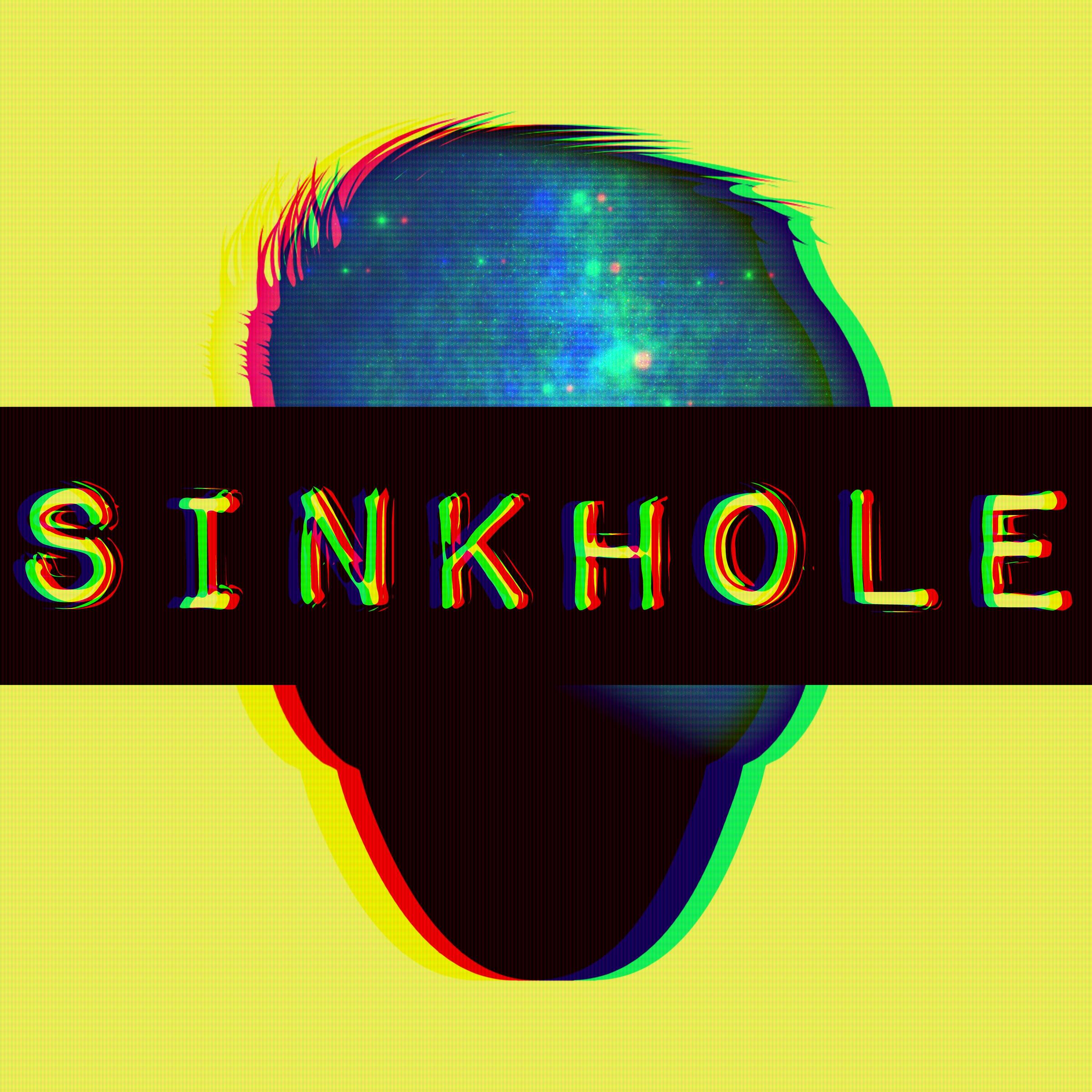
The Audio File: SINKHOLE: Season 1

Sometimes I get asked by various individuals to review their audio dramas. I’m alway happy to oblige these individuals. For this audio drama we’re reviewing today, however, I got volunteered by someone else. Certainly a new experience for me. So, without any more preamble, let’s get into. We’re taking a look at season 1 of SINKHOLE


SINKHOLE is set in the future. I can’t get more specific without getting into major spoilers. I can, however, say that most people directly connect to the Internet via neural implants in their brains. Older form of media, such as CD, DVD, and especially tapes, have fallen by the wayside. However, there are dedicated online communities working to preserve and access these older forms of media, and the information contained within. We follow a person chooses to remain anonymous. They’re an expert in all things pre-NEV tech. They’ve also got plenty of secrets about their past, and a listenership who are eager to dig them up.

As I previously stated, this one was a new experience for me. Usually, I get audio drama creators directly asking me to review their shows. In this case, however, Ivan Mirko S, the creator of The Program Audio Series, recommended me as someone who would be good to review SINKHOLE. It began, as with many things, on the r/audiodrama subreddit. SINKHOLE creator Kale Brown, who uses they/them pronouns, was asking about finding people to review their show. IMS recommended me, and here we are now. Well, I got a bit sidetracked by other things, but we’re here now.

Kale Brown has been involved in several other audio dramas. For example, they have provide voice work for shows such as Breathing Space, Fading Frontier and Two Flat Earthers Kidnap a Freemason. Kale has also worked as editor on the Breathing Space episodes “The Tale of the Knock at the Airlock” and “The Station at the End of the Universe.”

I also have to give a quick area of praise. I like the way Kale Brown approach making audio dramas. I remember them saying on Twitter that you don’t have to follow a lot of the so-called “commandments” of making podcasts. Some people might say SINKHOLE has episode that are too short, but I strongly disagree. Episodes of SINKHOLE usually average between ten to twelve minutes. I think that the episodes are exactly the length they need to be. Residents of Proserpina Park usually has episode around the length, and it works out pretty well for them.

Some people say that you shouldn’t drops shows on Friday, but I also strongly disagree with that. Greeking Out, Friday Knight Fights, and The Centropic Oracle all drop new episodes on Friday. I alway listen to those episodes on the day they come out. The point being, as Kale notes, if you just want to make a show, well, just make it. Don’t worry if you aren’t an instant smash hit. You’ll find your fans with time.

A lot of audio drama advice assumes that everyone is making the same sort of show. I’m developing an anthology audio drama, and I’ve become well aquatinted with how the advice tends to be geared towards serialized shows. Kale strikes me as someone who is true to themselves and willing to stick to their guns. I respect that attitude. In fact, that Twitter thread is what reminded me I needed to get my ass in gear and get this review out.

Let’s talk about the voice acting. Now, there are a few other characters who appear via recordings. However, for the most part, the narrator has the carry the lion’s share of the show. I’m happy to say that Kale an excellent job carrying the major of the series. They really capture that feeling of world-weariness and detached cynicism that the narrator embodies.

Okay, now there’s something else we need to discuss before we go any further. SINKHOLE is one of those shows that relies on slowly peeling back the layers, and slowly revealing its worldbuilding. As such, it is very hard to discuss the plot of SINKHOLE without getting into major spoilers. So, if you don’t want any of that, turn back now.

If everyone who wants out is gone. Let’s get into it.

So, we start with learning about data retrieval and preservation. I must admit, I’ve never really been into that sort of thing. However, the narrator makes it all sound very interesting. Of course, for people in-universe, there are some unique risks. The narrator advises against downloading the data over a neural implant. The implant slows down your perception time to match download speed. However, this can take a while, meaning that you can be severely dehydrated, or even dead, by the time the download finishes. All the while, we get some hints that there’s something very sinister lurking in the background of all of this. It’s all very atmospheric, and builds a sense of tension and uncertainty.

Alright, all well and good, but what’s it all leading to? Why should I care about any of this? I don’t mind a bit of mystery and intrigue, but I don’t like to be strung along for too long. Thankfully, the answers to these questions would be revealed before long.

Now, there’s a small number of people who can’t use neural implants due to health conditions. However, there are special procedure they can undergo to correct this. Albeit, said procedure is often very expensive. Pretty much all jobs require neural implants, as do many other aspects of modern life. For example, people an use their implants to directly connect to each other’s minds, and experience another person’s emotions and feelings.

However, that’s not a option for the narrator. No, it doesn’t have anything to do with money. You see, they don’t really have the top part of their head. They fell into a sinkhole, and when they came out, the top of their head had become a void known as a sinkage. Anything that falls into their sinkage disappears into the void. They have to be aware of something on their head, or else it falls into the sinkage. Hats are okay, as you’re always kind of aware that you’re wearing a hat. Glasses, however, have to be uncomfortable, or they fall into the sinkage. There’s about ninety-nine other people who also fell into the Hole. They also came out of the Hole much like the narrator did. Oh, and on top of everything else, the narrator and their compatriots came out of the Hole thirty years in the future. Though, from their perspective, it was all instantaneous.

Alright, now we’re talking! The general vibe I get from SINKHOLE, now that I know all this, is that it reminds me of The SCP Foundation. We’ve got an average person who encountered a seemingly normal object, in this case a hole in the ground. But said object wasn’t so ordinary, and changed the person in a fundamental way. As a result, the person isn’t exactly a normal human anymore, and finds themselves in a strange new world. I don’t know about you, but that sounds exactly like the set-up for an SCP article. I don’t know if this is intentional, but Kale Brown really captured the feeling on an SCP tale. The SCP Foundation is most famous for its articles detailing information about the various anomalies. However, there are also short stories, known as tales, set within the SCP universe. Some SCPs are objects with unusual qualities, but some are people or animals with unusual qualities. In fact, some humanoid anomalies were just regular humans that got exposed to something that turned them into SCPs.

So, in many ways, SINKHOLE kind of feels like a tale told from the perspective of an SCP. I wasn’t sure about the cyberpunk elements at first, but they grew on me. They really added to the story, and the atmosphere of the setting. The fact that the narrator is an inadvertent time traveler also leads to some interesting culture clash. The people of the future don’t really believe in privacy and personal boundaries. As previously stated, the implants let them literally get inside peoples’ heads. The narrator, being from our time, has far stronger views about privacy, hence their deliberate anonymity.

Well, I have to be honest. SINKHOLE isn’t the sort of show that I would have sought out on my own. Despite this, I enjoyed it a lot more than I was expecting. The episodes were exactly the right length, things really picked up when the bigs secrets were revealed, and said secrets didn’t drag for too long. I would recommend giving season one of SINKHOLE a try for yourself.

And who knows? Perhaps I’ll be coming back for season two when it comes out. From the looks of it, season two will be here before long.

Well, I think that should do it from me for now. I will see you guys next time.
Thursday, July 7, 2022

The Audio File: Seen and Not Heard

Audio drama, and audio fiction in general, is the last place you’d expect to find people who are deaf or hard of hearing. Despite this, there are a surprising number of such individuals involved in the world of audio drama. And it isn’t just fans. In fact, the audio drama we’re taking a look at today was created by one such individual. We’re taking a look at Seen and Not Heard


Seen and Not Heard follows a young woman named Bet Kline. She has recently lost most of her hearing as a result of an unspecified illness. The series follows a few weeks in Bet’s life as she tries to navigate her now mostly soundless new life. She has to deal with her rather insensitive mother. She meets a nice young man named David, who might be more than he appears. More than anything, Bet has to decide what she wants out of her new life.

I first become aware of Seen and Not Heard when it got recommended to me on that “You Might Also Like” section of the Apple Podcast app. The first thing that stood out to me was the title card. You see a circle of hands using sign language. That, plus the title, clearly indicated that this would be something involving deafness. A non-fiction podcast about deafness would certainly be odd, but not necessarily out of the question. But this was recommended based on my recent listening. Surly, it couldn’t be an audio drama about deafness, could it? I tapped the cover art, and sure enough, that’s exactly what it was.

I admit that this show had a certain dancing bear element to it. It’s not everyday that you find an audio drama where the main character is deaf. Oh, but that’s not the only unusual feature about Seen and Not Heard. You see, it is also created by a deaf individual. Series creator Caroline Mincks, who uses they/them pronouns, is legally deaf. They describe themselves as being exactly halfway between fully hearing and fully deaf. So, they have some hearing, but it is less than optimal. They often get help from their friends to make sure that the audio from their podcasts is correct and up to snuff. And yes, that’s podcasts plural. Caroline Mincks has made several other podcasts besides just Seen and Not Heard. They have also worked on several other audio dramas, and have helped make transcripts for several shows. Speaking of which, transcripts are available on the Seen and Not Heard Twitter account.

And Caroline isn’t alone. As it turns out, there are a surprisingly high number of deaf and/or hard of hearing individuals who enjoy audio dramas. They come because the shows all seem interesting, and they want to take partake in them. Just the same as hearing people do. This is why it is important to include transcripts with your audio dramas. Without them, it is very difficult for deaf and hard of hearing individuals to enjoy audio dramas. Also, transcripts are very handy for people who write reviews of audio dramas.

Now, prior to listening to Seen and Not Heard, I’d had a less than stellar experience with depictions of deafness in audio dramas. The only other time I’d seen deafness in audio dramas was in The AM Archies; which is season six of The Bright Sessions. There’s a scene between a hearing character and a deaf character. The deaf character communicates using sign language, which is conveyed by a series of barely audible wind rushing noises. I actually had to rewind multiple times to just to figure out what the hell I was listening to. It didn’t help that Lauren Shippen bragged about how groundbreaking the scene was on Twitter. She came across less as someone who wanted to sincerely depict deafness, and more like she was cynically trying to virtue signal. It also didn’t help that the characters only appeared in that one scene, and had no impact on the plot.  

I went into Seen and Not Heard with an open mind, but I was fully prepared for it to be terrible. Much to my surprise, Seen and Not Heard proved to be quite well-written, and took great care to execute it premise in an entirely audio medium. There is strong feeling of sincerity and genuine care being put forward. This is clearly a very intimate subject for Caroline Mincks, and they wanted to do the topic of deafness proper justice in an audio medium. I alway give points to those who act with sincerity and genuine conviction.

We get a few scenes where we actually get to hear what things are like from Bet’s perspective. It sounds like she has her head underwater. I could kind of make out a couple words and phrases, but I was fairly lost during those scenes. Of course, that’s the point of those scenes. We’re suppose to sympathize and empathize with Bet’s struggles. Bet communicates verbally both in interactions with other characters and her internal monologue. Bet was not born deaf, so presumably she remembers the mechanics of talking. It is also mentioned that she can lip read, and can somewhat better understand people if she’s facing them. She does enroll in a sign language class. She’s the only actual deaf person in the class. Pretty much everyone else has family of significant others who are deaf or hard of hearing.

I should probably mention that, technically, Bet’s real name is Beth. Apparently, she had a slight speech impediment as a kid, and pronounced her name as Bet. So, the mispronunciation stuck later in life.

I must also give credit to Seen and Not Heard for another aspect. There are three mini-episodes that occur before the main series. They offer brief vignettes into Bet’s life. One of them involves Bet going to visit her rabbi for advice and guidance. Now, in the past I have made it no secret that I have an extreme disdain for ordained clergy, and other religious figures. So, it is a testament to Caroline Mincks’ skill as a writer that I found the rabbi to be an incredibly enjoyable character. One of my favorite lines from her was towards the end of the mini-episode. She says, basically, “You don’t have to love your lot in life. Be angry, be pissed off, very Jewish thing to do. But for as long as you can, however you can, leave goodness in your wake in spite of how the world treats you. And if you can’t do any good, just don’t do any harm.”

Bet’s mother is someone who really ought to heed that advice. There are very few audio drama characters who have made me feel genuinely angry. Mrs. Kline, however, was one such character. It is very clear that she and Bet have been having issues for quite a while. She frequently chides Bet for not focusing more during family dinners and other family gatherings. She ignores how Bet genuinely is trying her best, but still has understandable struggles with keeping up. It doesn’t help that the rest of Bet’s family is fairly inconsiderate of her needs. Mrs. Kline also considers Bet’s sign language classes to be a waste of time and money. In fact, Mrs. Kline boarders on being flat out abusive at times.

I’m reminded of a PBS documentary I once watched about the history of deaf people in America. It mentioned how education deaf children used put a lot of emphasis on lip reading and vocalization. The educators claimed this was for the benefit of deaf children, but it was really because doing that made things easier for hearing people. It used to be like that for autistic people too. In the past, emphasis was on getting autistic children to act more like neurotypical people. However, in recent years the emphasis has shifted to accommodating the needs of autistic individuals. You’re probably wonder why I brought this up, but we’ll get to that in a minute.

Bet works as a food photographer. She has a true passion for all things culinary. In fact, she wanted to be a chef, but losing her hearing put the kibosh on that dream. Granted, there are some restaurants where the kitchen staff are all deaf, but Bet has made peace with giving up that dream. In Bet’s defense, professional kitchens can be fairly dangerous; with lots of things that can seriously injure you if you aren’t careful. Still, I wonder how Bet would be faring if she’s dreaming of doing something involving sound. Like, say she wanted to becoming a musician, or a 911 dispatcher.

I do wonder how much of Seen and Not Heard is autobiographical. It didn’t escape my notice that Bet and Caroline Mincks share a number of similarities. They are both Jews from northern Virginia. Many of the foods that Bet cooks and eats are also ones I’ve seen Caroline mentioning cooking on Twitter. They also seem to be fairly similar in terms of personality. There’s also the obvious similarity that they are both deaf to the same degree.

There’s a bonus episode where Caroline Mincks gives advice on how do write deaf characters, as well as a bit about what it is like to be a deaf audio drama creator. They said it is considered rude to ask deaf people how they became deaf. Be that as it may, given all of the other similarities between Bet and Caroline, I can’t help but wonder. I also wonder how much of the plot draws from Caroline’s own life. There are some differences, like how Caroline identifies as non-binary, while Bet identifies as female. However, I also don’t know how Caroline identified when Seen and Not Heard was made.

I should also mention that, in addition to being the series creator, Caroline also provides the voice for Bet. Caroline gives a very earnest and heartfelt performance. It was quite clear, as with everything else, that this was a very personal subject for Caroline. Caroline also assembled a team of very talented voice actors to help bring the other characters to life.

As an aside, this is probably one of the scariest audio dramas I’ve encountered in quite some time. I was diagnosed with a learning disability, which included elements of dyslexia and dysgraphia. I learned from getting tested for learning disabilities that I’m very audio oriented. I often do best by listening. Audiobooks have been a major lifesaver for me. So, the idea that I could loose my hearing as a result of an illness was quite terrifying on an existential level. And yeah, Seen and Not Heard make a point that being deaf isn’t the end of the world. Still, I’m not sure how well I’d fare in such a scenario.

Towards the end of the series, Bet goes to an art show. Specifically, it is the art of the non-binary artist name Kit, who is also deaf and autistic. I was excited when I heard this because I am also autistic. I don’t often bring this fact up. I don’t actively hide that side of myself, but I don’t necessarily draw attention to it. I want people to think of me, for example, as Sam McDonald the Audio Drama Critic. I don’t want people to think of me as just Sam McDonald the Autistic Audio Drama Critic. Having autism is certainly a very important aspect of who I am, but it is not the only aspect of who I am.

In fact, I think this might be the first time I’ve actually encountered an autistic character in audio drama. I used to think that I was the only autistic person involved in the world of audio drama. I know of a grand total of one other autistic person in audio drama. That doesn’t mean that others aren’t out there; just that I haven’t found them yet.

Kit provides insight into what it is like to be deaf. Up until this point, Seen and Not Heard had done a good job of portraying deafness without being patronizing or dipping into sentimentality. Unfortunately, it found Kit’s scene to be far too saccharine for my liking. I also felt that Kit inadvertently played into the magical disabled person trope. A close cousin to the magical negro, and alternatively known as inspiration ally disadvantaged, a magical disabled person provides folksy wisdom and down to earth advice. They almost alway provide this advice to an able-bodied person, and their only function within the story is to lift the spirits of the able-bodied protagonist. Now true, Bet is also deaf, but she was born hearing. However, Kit’s only function within the story is to be Bet’s deaf senpai, and provide words of inspiration.

I mean, I do have to give Caroline credit for actually including an autistic person. It also isn’t their fault that autistic characters are still so rare in audio drama. Still, I was hoping that Kit would have been less of a stereotype and more fleshed out. I suppose that this is an example of how even well-intentioned individuals can still wind up playing into negative tropes.

Seen and Not Heard did manage to redeem itself with how things ended. Bet doesn’t come to a big revelation about life, the universe, and everything. She doesn’t even come to terms with being deaf. She still has mountains to clime and challenges to overcome. In fact, she might never truly be at peace with loosing her hearing. But right here, right now, she feels just okay. And is okay to just be okay. Put another way, it is perfectly good to be good, and not perfect. In other words, perfect is the enemy of good.

This is a lesson that I myself have had to learn. In fact, it’s one I still need to do a better job learning. Depression and anxiety are often comorbid with autism, and that’s certainly the case with me. Misery loves company, as the saying goes. I’ve dealt with feelings of inadequacy my entire life. Sometime I wonder if I’m actually making a difference with these reviews, or if anyone actually cares what I have to say. I try my best give myself praise and reassurance for any improvements, no matter how small, I’ve made in my own life. The journey of 1000 miles begins with but a single step. Each step you take is worth celebrating.

Maybe Bet doesn’t have it all figured out, but she feels okay, at least for the moment. And that is certainly something worth celebrating. This is a very important message, and I’m glad that Seen and Not Heard resolved Bet’s character arc this way.

Caroline Mincks has hinted that we might be getting a season two of Seen and Not Heard. No details about the plot, only that it will be gayer. Hmm, if I had to speculate, I would guess that Bet will come out as non-binary. Bet will also develop an interest in audio drama podcast, and will perhaps make one. And perhaps said podcast is reviewed by an audio drama critic from Shreveport, Louisiana? 

In other exciting developments, Seen and Not Heard, along with all of the other shows Caroline Mincks had made, was picked up by Realm Media. Realm has been scooping up a lot of audio dramas recently. They also recently acquired all the shows from Observer Pictures, Fool & Scholar, and Curious Matter. In other Caroline Mincks productions, I recommend Silly Old Bear. It is an utterly adorable adaption of the original Winnie-the-Pooh stories by A.A. Milne. 

But whatever the future holds, I do know that I greatly enjoyed Seen and Not Heard. I took a gamble on this one, and it paid-off. It made the bold choice to depict the experience of deafness in an purely audio medium. It succeeded with flying colors. Give it a listen if you haven’t already.

Well, I think that should do it from me for now. I will see you guys next time.

Tuesday, June 28, 2022

The Audio File: Young Ben Franklin: Welcome to New York

Sometimes a great audio drama dies after only one season. Other times, an audio drama is specifically designed to be a limited series. Then, on rare occasions, there are shows that looked like they’d only last one season, but wind-up getting more seasons. We’re going to be taking a look at a show which falls in the third category. We’re taking a look at Young Ben Franklin: Welcome to New York


When we last left our hero, fourteen-year-old Benjamin Franklin was about to depart from Boston to either New York City or Philadelphia. I assumed it would be the later, but it would seem that I was wrong. New York is a vibrant, but also very seedy and corrupt, city in 1722. Ben’s going to need all of his wits and cunning if he’s going to stay out of trouble. Along the way, he’ll make some new allies, and several new enemies. There’s plenty of thrills and adventures to be had in the next exciting chapter of young Ben Franklin’s life.

Well, I have to be honest, I was not expect this to be the Gen-Z Media show to get a sequel. Don’t get me wrong, season one of Young Ben Franklin was absolutely fantastic, and I loved it. However, the ending felt like it tied everything together pretty well. There weren’t any dangling plot threads, or hints that a new season might be on the way. But then there’s been exciting things happen behind the scene at Gen-Z Media. Gen-Z Media was recently purchased by Wondery. They’re a podcast network that has help make several fantastic shows such as 1865, Imagined Life, Blood Ties, American History Tellers, and a pretty good adaption of The Handmaid’s Tale. To any parents reading this, I must here warn that most of the shows I just mentioned are decidedly not kid-friendly. 

Anyway, funnily enough, it wasn’t all that long ago that Wondery got purchased but Amazon. So, this means more money all around. And more money means more audio dramas. I wonder what other Gen-Z Media shows will be getting new seasons? I hope this means we won’t have to wait as long for season three of The Natureverse.

Some of you will probably note that Benjamin Franklin never visit New York City during his youth in real life. Old Ben notes, towards the end of the season, that this is one of the events that didn’t make it into the history books. So, you can view Young Ben Franklin in general as the untold story of the lost years of Benjamin Franklin. Well, assuming that Old Ben can be trusted, and isn’t embellishing/fabricating any details.

Ben makes new allies in the form of some local ne’er-do-wells called The Dirty Dogs. They’re pretty clearly a stand-in for Ben’s friends from season one, The Wharf Rats. Though, there are a few slight differences. The Dirty Dogs are headed by a charismatic Irishman named Danny Quinn, who doesn’t really have an equivalent within The Wharf Rats. Well, perhaps he parallels Ben himself to an extent. Danny is extremely quick-witted and can talk his way out of just about any situation. He also crafts incredibly intricate plans, often on the fly, but always manages to pull them off. I think my favorite member of The Dirty Dogs was Ruby. She’s the token girl of the group, but she’s streetwise and tough-as-nails. She’s can be a bit jerk at times, and is very snarky towards Ben, but is also kind of endearing. In fact, she’s the first person Ben encounters upon arriving in New York. She pretended to be in need of help, but then mugged Ben at knifepoint after she lured him into a back alley.

In other characters, there’s Hannah. She is a free person of color, and hopes to open the first school for black children in New York. Hannah is a fictional character, and thus, her plan is doomed from the start. Young Ben Franklin has its fun, and bends historical events slightly, but tries to be reasonably true to the historical record. But hey, her granddaughter gets to attend New York’s first school for black children in 1794, so, not a total bust. Overall, I thought that Hannah was reasonably well written. That being said, I found there were a few times the dialogue got a tad clunky. When Ben first meets Hannah, she sasses him around and launches into a lecture about how being a slave is very different from being an indentured servant. Okay, fair point, but it could have been delivered in a far more organically. I’m not a big fan of delivering messages didactically. I find to be lazy, and bad writing in general.

On the other hand, I liked how this season touched on more serious issues, such as the legacy of slavery in Early America. When we think of slavery, we tend to think of places below the Mason-Dixon Line, such as Charleston or New Orleans. However, many Northern states also practiced slavery prior to, and even several decades after, the American Revolution. Many streets of New York and Philadelphia were built using slave labor. The dockside of Manhattan used to be home to a fairly large slave auction. Quite ironic in the case of Pennsylvania, which later become a major stop on the Underground Railroad. New York granted gradual manumission starting in 1799. Full abolitions of slavery in New York was finally achieved in 1827.

Personally, I think that it is good that Young Ben Franklin touches on these issues. In many ways, America’s schools still don’t do a proper job teaching about slavery. Some people say that isn’t patriotic, but I disagree. It is perfectly patriotic to learn from the mistakes of our past. How else will we be able to build a truly better future for all Americans?

I won’t give away the villain of the season. However, I will say that the twist was both refreshing and genuinely surprising. I did not see it coming. So, hats off to Gen-Z Media for that.

There are four mini-episodes that preceded that main episodes of Welcome to New York. They are an interview with historian, and Benjamin Franklin scholar, Dr. George Boudreau. He talks about all sorts of interesting facts about the real Benjamin Franklin. For example Benjamin Franklin invented the world’s first swim fins. This fact winds up getting working into the main show. Swimming was one Benjamin Franklin’s favorite forms of exercise. Another fun fact is that printing presses required a lot of upper body strength to operate. As such, Benjamin Franklin was quite muscular in his youth. We also learn about some of Dr. Boudreau’s own escapades. For instance, he once discovered one on Benjamin Franklin’s original lightning rods at an excavation at Liberty Hall in Philadelphia. He was moved to tears by the thought that he was holding something that Franklin himself once touched. Some tourist were walking by, including a small boy who said “Daddy, a fat man fell into a hole in the ground, and now he’s crying.” ‘

Dr. Boudreau also educates listeners about Benjamin Franklin’s personal failings. Later in his life, Benjamin Franklin spoke out again slavery, and was the president of an abolitionist society. Despite this, he also owned five or six slaves over the course of his life. And yes, they were slaves, not freemen. Franklin’s letters to his wife make that very clear. It is certainly important to praise Franklin for his achievements. Indeed, there is much to celebrate about the man. At the same time, it is also important to acknowledge his shortcomings as an individual.

Unfortunately, the main show fails to do the latter. True, Old Ben does mention that he regrets that he didn’t speak out against slavery sooner. However, he also fails to mentions that he owned five or six slaves. I get why Gen-Z Media probably did this. It would be kind of hard to root for Young Ben if the listeners know he will grow up to be a slave owner. All of his speeches about liberty and freedom would certainly ring a bit hollow. It would also give the unfortunate impression that he got sick of Hannah bossing him around, and tried to get revenge on her by proxy.

Overall, however, I was very pleased with Young Ben Franklin: Welcome to New York. It would seem that Young Ben will be on many more adventures in the relatively near future. In fact, we’ve got a Halloween Special on the way. I wasn’t expecting Young Ben Franklin to be getting any sequels, but I’m excited to see where the story goes. We need more quality historical fiction aimed at kids. Young Ben Franklin is certainly doing its part to bring a quality historical fiction audio drama experience for the whole family to enjoy.

Well, I think that should do it from me for now. I will see you guys next time.