Wednesday, July 20, 2022

The Audio File: The Call of the Void

I have my tastes and preferences when it comes to audio dramas. Having said that, at lot of times, I won’t know if I’ll like something until I give it a try. As with many things, finding a great audio drama often comes down to pure chance and luck, more than anything else. Though, I certainly hope my reviews help you to find great audio dramas. There’s no much more to add, so let’s get right into it. We’re taking a look at The Call of the Void


Topher Sommers is a tour guide who works at the New Orleans Pharmacy Museum. He’s got a fairly good life, and is reasonably happy. Then his father, a prominent physics professor, disappears. Topher and his sister Simone try to retrace their father’s steps. This leads Topher to a palm reader named Etsy Delmen. She went to school with Topher, but he kind of forgot about her over the years. Etsy is hide a few secrets of her own. Topher and Etsy hit the road to retrace Mr. Sommers tracks, while Simone stay behind in New Orleans. Topher and Etsy are about to find more than they bargained for. They will discover arcane symbols, deranged cultists, morally questionable experiments, and eldritch horrors from beyond this universe. This is The Call of the Void. Stay tuned, stay sane.

I had known about The Call of the Void for a while. I’d seen it get recommended alongside shows such as Spaceships, The Strata, and Residents of Proserpina Park. The Twitter account for The Call of the Void even followed and unfollowed me a couple times. I did follow them back eventually, but I think I ought to explain my process. I don’t follow shows on Twitter until I have caught up with all available episodes that they have. It’s nothing personal, it’s just how I conduct myself. But it was also clear that The Call of the Void was trying to get my attention. Okay, it worked. You guys twisted my arm enough, and I gave the show a listen.

I sometimes get the feeling that shows follow me on Twitter in order to fish for a review. As such, I must repeat what I said during my review of We Fix Space Junk. If any of you who create audio drama would like a review, just be direct. You can message me on Reddit, or send me a direct message on Twitter. You can also comment on one of my many posts on r/audiodrama, or the other subreddits I post in. Or you can message me on Facebook; I'm active in the Audio Drama Lovers group and the Audio Drama Hub group. You can also message my Facebook fan page for this blog, Sam McDonald's The Audiophile. Point is, there's a lot of way to get in touch with me. The best way to guarantee that I'll review your show is to directly contact me. As you might have noticed, I'm more than happy to give any show a shot.

I’ll admit that horror investigation audio dramas aren’t really my go-to genre. Despite this, The Call of the Void managed to hold my interest for all three seasons. I was worried that things would move too slow, and both the mystery and plot would drag on. Thankfully, this was not the case. The plot moved at a decent speed. In fact, there were times when season one felt like it was moving a bit too fast. Fortunately, these pacing issues were smoothed out in seasons two and three. I was also intrigued by the references and connections to the Lovecraft Mythos. I am a fan of the works of H.P. Lovecraft. Let’s see: incomprehensible eldritch horrors from beyond this universe, deranged cultists who worship said eldritch horrors, mysterious archaic symbols, academics driven mad by the eldritch horrors. I don’t know about you, but that all sounds pretty Lovecraftian to me.

Also, as someone from Louisiana, I’d be lying if I said that The Calling of the Void being set in Louisiana didn’t intrigue me. My dad’s side of the family is from throughout the greater New Orleans area. So, I’ve visited New Orleans on quite a few occasions over the years. While we’re on the subject, points for getting the pronunciation correct. Those of us from Louisiana pronounce it New Or-Lens, not New Or-leans. I realize this makes no sense to non-Louisianans, but that’s how we pronounce it. Saying it as Or-leans is a good way to get yourself marked as a tourist. Also, points for remembering that Louisiana is divided into parishes, not counties. It is a legacy from our days as a colony of France and Spain, who were both Catholic nations. Louisiana is one of only two states that don’t use counties. The other one is Alaska, which uses boroughs.

Let’s talk about the characters, starting with Topher. As previously stated, Topher has a degree in history, and works at the New Orleans Pharmacy Museum. It is a real museum that is located in the French Quarter. I’ve been going to New Orleans for many years, but I haven’t been to the Pharmacy Museum yet. I’ll have to correct that next time I’m down there. It certainly looks like and interesting place, and I’ll be able to mark it on my Atlas Obscura list, which is a nice bonus. I’m kind of tempted to ask if Topher Sommers is in just to see how the tour guides will react. As someone with a bachelor’s degree in history, I can confirm that Topher working as a tour guide checks out. A lot of history majors hope to work in museums someday. Though only a lucky few actually manage to achieve that dream. It helps if you can find work at a smaller museum, but even then it can be a bit dicey.

I also liked how Topher has a habit of cheerily rattling off disturbing medical history facts. That’s something else that is common to history majors. Depending on what your focus is, you can get desensitize to some pretty grizzly stuff fairly quickly. I helps if you’re a fan of Horrible Histories, both the books and the television series. I did my senior paper on the history of Mesoamerican civilizations. Human sacrifice was an unavoidable topic, as were religious rituals involving flaying and blood letting. Unavoidable, but I was never really phased by it all. In fact, I took a more nuanced view. At least the Aztecs and Mayans killed people because they thought it was required to keep the world running. The Romans, by contrast, killed people just for entertainment. Yet we don’t discount all the achievements the Romans made because of that.

Time to move on to Etsy before this turns into a Mesoamerican History lecture. Etsy works as a palm reader at a voodoo shop, and she actually has psychic powers. When I first start listening, I was worried that The Call of the Void would fall into the stereotypical depiction of Voodoo. In real life, Voodoo, known in Haiti as Vodou, is a syncretic religion that combines traditional West African religions with Roman Catholicism. It believes that there is a creator god, but he’s preoccupied with keeping the universe running. So, the day-to-day affairs are relegated to lesser spirits known as loa. Practitioners of Voodoo don’t worship the loa, but they do serve them, and give them offerings. Voodoo is a religion like any other. All of that folk magic stuff is known a Hoodoo, also known as root working. Besides the similar names, both Voodoo and Hoodoo are practiced in New Orleans, and there’s been some cross-pollination over the years.

But “voodoo dolls” are totally fake. West African religion often uses dolls known a Fetishes for rituals. Europeans mistook these for Popits, which are a form of folk magic from Europe, and ironically closer to the traditional view of voodoo dolls. The confusion persisted and the myth of the voodoo doll was born. Having said all of that, Louisianans will happily sell “voodoo dolls” to gullible tours, often for a very high price. Hey, don’t give me that look. Louisiana’s economy has been in the toilet for decades. We get excited every time a new Popeyes opens because it means seven or eight new jobs. Swindling drunk gullible tourists helps keep our economy floating.

Thankfully, Etsy’s job was a red herring. Tourist Voodoo is just a bogus in The Call of the Void as it is in our world. Etsy get her powers as a result of experiments she was subjected to as a child. Her mother believed that subjecting Etsy to sensory deprivation experiments would lead to her being able to reach into other universes. And it did, sort of. Etsy can experience another person’s memories by touching them. So, I guess she’s kind of like Rouge from X-Men. Of course, the experiments also lead to her making contact with an entity known as The Void. It is entropy and nothingness incarnate, and it is trying to enter our world. I would argue that, in many ways, Etsy is the true protagonist and driving force of the series. Her connection to The Void drives much of the action across all three seasons.

That said, we do experience Etsy’s story, for the most part, from Topher’s point of view, for the most part. It kind of like those anime where the girl character appears on the cover, and is the one who gets the attention from the fandom, but the boy is the viewpoint character. This is especially amusing, as I believe that’s suppose to be Etsy on the series title card.

There’s also a colorful cast of side characters. Etsy has gotten into numerous run-ins with the law over the years. As such, she’s well aquatinted with Officer Mason. He kind of sounded like Rabbi Bengelsdorf from the HBO miniseries adaption of The Plot Against America. Though, it was just coincidence, as they’re played by separate actors. Officer Mason starts off as a grumpy middle-aged man, but he warms up to Topher and the gang with time.

Topher’s sister Simone is also an enjoyable character. My only complaint with her is that she works at a bakery in season one, but then she’s studying theoretical physics in season two. It felt like there was no set-up for that, and it felt like it came out of left-field. Also, she used to work at a bakery, and she has a boyfriend named…Baker? I mean, its not really anything major, but it a little on the nose.

In season two we get to meet Fargo Kaminski. Under normal circumstances, she’d be like one of those crazy conspiracy loonies you see on The History Channel. However, though more than a tad eccentric, she prove to be a valuable ally to Topher and Etsy. Fargo lives out in the swamp, and has a pet alligator. She just does. And yeah, maybe she’s a little crazy, but hey, its a Lovecraft-inspired story. Pretty much everyone is going to be a little crazy.

I’d now like to take a moment to talk about the voice acting. Etsy and Topher are voiced by series creators Josie Eli Herman and Michael Alan Herman. They both look fairly spot-on for how I envision Etsy and Topher looking. In fact, that’s Josie cosplaying as Etsy on the series title card. Needless to say, they portray their characters quite well. Michael nails Topher’s dorky, but endearing, personality. Likewise, Josie really captures Etsy’s conflicted nature. She gives an understated and somewhat emotional detracted performance, but also give subtle hints at the sadness and trauma Etsy carries within her. I must also give praise to Amanda Buchalter’s performance as Simone. She and Michael sounded like that could pass as actual siblings. Really, the entire cast gives very strong performances. I have not complaints there.

As I noted at the beginning, The Call of the Void draws heavily upon the works of H.P. Lovecraft for inspiration. The Void itself wouldn’t be too out of place in a Lovecraft story. Even the way it factors into the plot of The Call of the Void evokes Lovecraft. H.P. Lovecraft came up with a pantheon of Great Old Ones with a very detailed mythology. However, the Great Old Ones usually don’t directly appear in Lovecraft’s short stories. They’re usually lurking just off-screen, for lack of a better way of putting it, and manipulating things from the shadows. The Void only directly appears a few times, but its presence is very much felt. 

The main antagonist of season two is known as The Yellow King. This is an obvious reference to The King in Yellow. The King in Yellow was created by Robert W. Chamber. However, Lovecraft was a big fan of Chamber’s work, and incorporated The King in Yellow into the Cthulhu Mythos. Speaking of Cthulhu, I get the impression that the title of the series might be a reference to “The Call of Cthulhu.” Topher, Etsy, and the gang are also menaced by Night Gaunts at the end of season two, and the start of season three. Points for picking one of the more obscure Lovecraft monsters.

Topher is a big fan of Lovecraft’s work as well. However, we only find this out towards the end of season two. Considering all of the Lovecraftian motifs, starting all the way back in season one, Topher really should have spoken up sooner. Also, when faced with a dark cyclopean city in season two, Topher likens it to R’lyeh, the resting place of Cthulhu. Uh, given that the Yellow King is the antagonist of season two, wouldn’t Carcosa be a more fitting comparison? A supposed Lovecraft fanatic like Topher really should have picked up on that.

Also, The Call of the Void bills itself as science fiction, but it’s really science fiction to the same extent that Stranger Things is. Though, this isn’t too surprising, given that the creators are big fans of Stranger Things. They’re also big fans of Avatar: The Last Airbender. Parts of the finale for The Call of the Void remind me of what the lion-turtle said to Aang in the Avatar finale.

Okay, so now we’re going to have to get into some major spoilers. If you don’t want any of that, turn back now.

Last chance, you sure you want to continue?

If everyone who wants out is gone, let’s get into it.

Now, I stated that season one felt like it was moving too fast. That also extends to the ending. Etsy gives into despair decides to help the cult summon The Void…and then, in the very next episode, changes her mind, decides she does have something to live for, and seemingly banishes The Void. It was such a jarring whiplash of an experience it almost bordered on comical. It felt like the production team wasn’t sure if they’d get more than one season, and were trying to hastily wrap things up. Nothing about the season one ending feels earned or satisfying.

However, the team seems to have realized this, and seasons two and three have much better pacing. It is also clear that they were playing the long game this time. In fact, season two and three feel like they are two halves of a single continuous story arc. They take time to properly develop Etsy and Topher’s characters and motivations. We get proper build-up for Etsy’s growing feeling of despair, but also how Topher acts as her rock in troubled waters. The ending of season three has a similar set-up to the ending of season one, but the execution is much better. In fact, the series ending almost feels like an apology for the way season one ended.

And this is actually in keeping with the series’ Lovecraftian roots. Lovecraft was famous for being a pessimist and a nihilist, but a surprising number of his stores had happy endings. Or at the very least, ended in ways that weren’t completely horrible. The Dunwich Horror, The Case of Charles Dexter Ward, and The Dream-Quest of Unknown Kadath all qualify. A case could be made that even The Shadow Over Innsmouth counts, given that the protagonist comes to terms with what happens to him.

The fact that Topher and Etsy finally become a couple is even sweeter when you remember that Josie and Michael are married in real life.

I also loved the episode of season two where Etsy flickers in and out of multiple universes. In one universe, she meets a Topher who works at the botanical gardens in Grand Rapids, Michigan. He’s a botanist, rather than a history major. Well, he calls himself an herbologist, but that’s probably what botany is called in that universe. This Topher, known as Christopher, loves to rattle off facts about deadly plants. You know what they say, the more things change, the more they stay the same. The idea that Etsy’s powers were surging in way she couldn’t totally control was very clever, and leads to some twists that I did not see coming.

If there is a central message to The Call of the Void, it is that bad things happen, often to good people, and the world is an often cruel and unkind place. But there is still hope despite all of this. A light within the darkness. Bad things may happen, but they can be overcome. It helps if you can find people who genuinely love and care about you. Darkness thrives in the void, but always yields to purifying light.

Well, it took me a while to get her, but I’m glad that I gave The Call of the Void a try. Don’t sit on this one like I did. Give it a try today. It is well worth your time. Come for the Lovecraft homages, stay for the engaging characters.

Well, I think that should do it from me for now. I will see you guys next time.

Wednesday, July 13, 2022

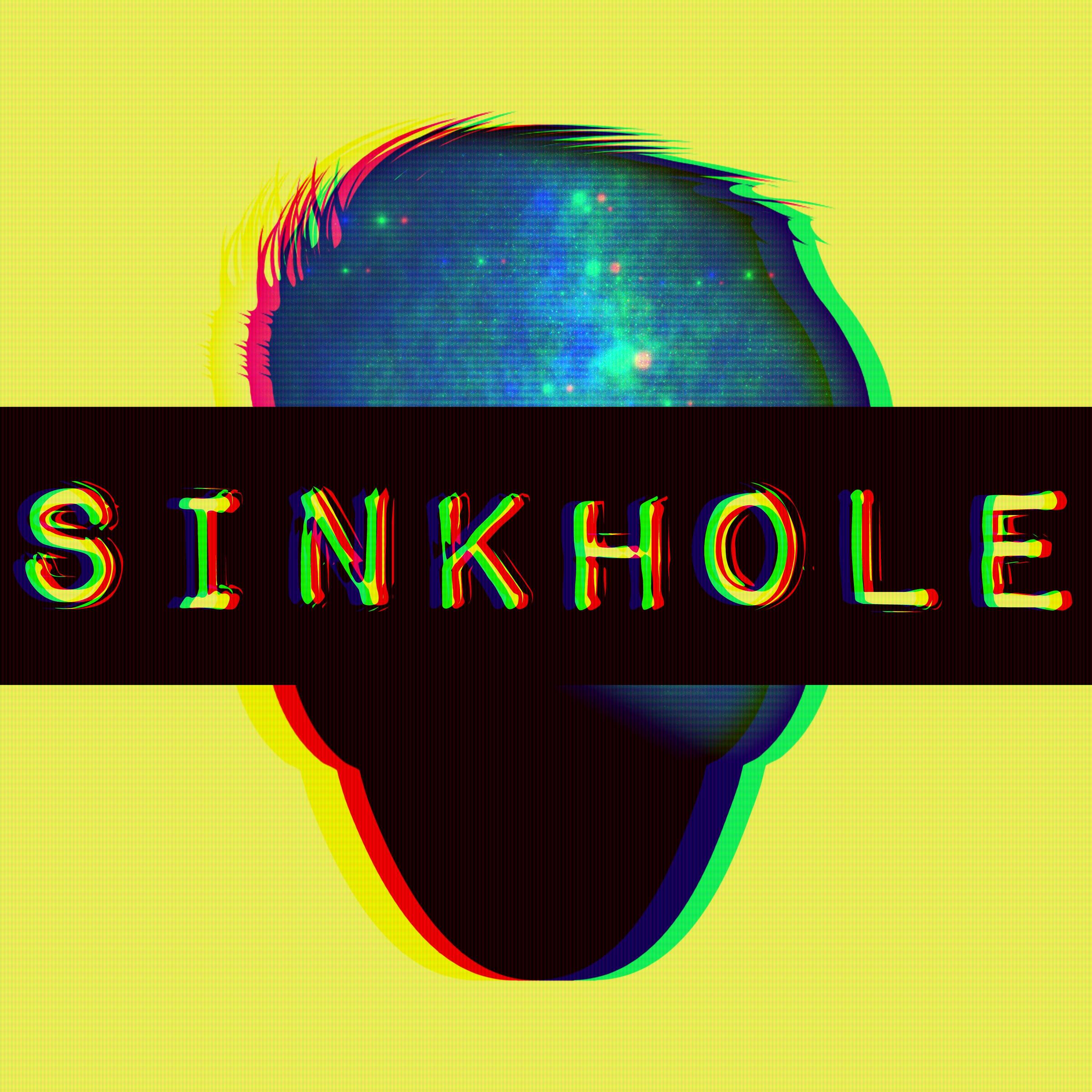
The Audio File: SINKHOLE: Season 1

Sometimes I get asked by various individuals to review their audio dramas. I’m alway happy to oblige these individuals. For this audio drama we’re reviewing today, however, I got volunteered by someone else. Certainly a new experience for me. So, without any more preamble, let’s get into. We’re taking a look at season 1 of SINKHOLE


SINKHOLE is set in the future. I can’t get more specific without getting into major spoilers. I can, however, say that most people directly connect to the Internet via neural implants in their brains. Older form of media, such as CD, DVD, and especially tapes, have fallen by the wayside. However, there are dedicated online communities working to preserve and access these older forms of media, and the information contained within. We follow a person chooses to remain anonymous. They’re an expert in all things pre-NEV tech. They’ve also got plenty of secrets about their past, and a listenership who are eager to dig them up.

As I previously stated, this one was a new experience for me. Usually, I get audio drama creators directly asking me to review their shows. In this case, however, Ivan Mirko S, the creator of The Program Audio Series, recommended me as someone who would be good to review SINKHOLE. It began, as with many things, on the r/audiodrama subreddit. SINKHOLE creator Kale Brown, who uses they/them pronouns, was asking about finding people to review their show. IMS recommended me, and here we are now. Well, I got a bit sidetracked by other things, but we’re here now.

Kale Brown has been involved in several other audio dramas. For example, they have provide voice work for shows such as Breathing Space, Fading Frontier and Two Flat Earthers Kidnap a Freemason. Kale has also worked as editor on the Breathing Space episodes “The Tale of the Knock at the Airlock” and “The Station at the End of the Universe.”

I also have to give a quick area of praise. I like the way Kale Brown approach making audio dramas. I remember them saying on Twitter that you don’t have to follow a lot of the so-called “commandments” of making podcasts. Some people might say SINKHOLE has episode that are too short, but I strongly disagree. Episodes of SINKHOLE usually average between ten to twelve minutes. I think that the episodes are exactly the length they need to be. Residents of Proserpina Park usually has episode around the length, and it works out pretty well for them.

Some people say that you shouldn’t drops shows on Friday, but I also strongly disagree with that. Greeking Out, Friday Knight Fights, and The Centropic Oracle all drop new episodes on Friday. I alway listen to those episodes on the day they come out. The point being, as Kale notes, if you just want to make a show, well, just make it. Don’t worry if you aren’t an instant smash hit. You’ll find your fans with time.

A lot of audio drama advice assumes that everyone is making the same sort of show. I’m developing an anthology audio drama, and I’ve become well aquatinted with how the advice tends to be geared towards serialized shows. Kale strikes me as someone who is true to themselves and willing to stick to their guns. I respect that attitude. In fact, that Twitter thread is what reminded me I needed to get my ass in gear and get this review out.

Let’s talk about the voice acting. Now, there are a few other characters who appear via recordings. However, for the most part, the narrator has the carry the lion’s share of the show. I’m happy to say that Kale an excellent job carrying the major of the series. They really capture that feeling of world-weariness and detached cynicism that the narrator embodies.

Okay, now there’s something else we need to discuss before we go any further. SINKHOLE is one of those shows that relies on slowly peeling back the layers, and slowly revealing its worldbuilding. As such, it is very hard to discuss the plot of SINKHOLE without getting into major spoilers. So, if you don’t want any of that, turn back now.

If everyone who wants out is gone. Let’s get into it.

So, we start with learning about data retrieval and preservation. I must admit, I’ve never really been into that sort of thing. However, the narrator makes it all sound very interesting. Of course, for people in-universe, there are some unique risks. The narrator advises against downloading the data over a neural implant. The implant slows down your perception time to match download speed. However, this can take a while, meaning that you can be severely dehydrated, or even dead, by the time the download finishes. All the while, we get some hints that there’s something very sinister lurking in the background of all of this. It’s all very atmospheric, and builds a sense of tension and uncertainty.

Alright, all well and good, but what’s it all leading to? Why should I care about any of this? I don’t mind a bit of mystery and intrigue, but I don’t like to be strung along for too long. Thankfully, the answers to these questions would be revealed before long.

Now, there’s a small number of people who can’t use neural implants due to health conditions. However, there are special procedure they can undergo to correct this. Albeit, said procedure is often very expensive. Pretty much all jobs require neural implants, as do many other aspects of modern life. For example, people an use their implants to directly connect to each other’s minds, and experience another person’s emotions and feelings.

However, that’s not a option for the narrator. No, it doesn’t have anything to do with money. You see, they don’t really have the top part of their head. They fell into a sinkhole, and when they came out, the top of their head had become a void known as a sinkage. Anything that falls into their sinkage disappears into the void. They have to be aware of something on their head, or else it falls into the sinkage. Hats are okay, as you’re always kind of aware that you’re wearing a hat. Glasses, however, have to be uncomfortable, or they fall into the sinkage. There’s about ninety-nine other people who also fell into the Hole. They also came out of the Hole much like the narrator did. Oh, and on top of everything else, the narrator and their compatriots came out of the Hole thirty years in the future. Though, from their perspective, it was all instantaneous.

Alright, now we’re talking! The general vibe I get from SINKHOLE, now that I know all this, is that it reminds me of The SCP Foundation. We’ve got an average person who encountered a seemingly normal object, in this case a hole in the ground. But said object wasn’t so ordinary, and changed the person in a fundamental way. As a result, the person isn’t exactly a normal human anymore, and finds themselves in a strange new world. I don’t know about you, but that sounds exactly like the set-up for an SCP article. I don’t know if this is intentional, but Kale Brown really captured the feeling on an SCP tale. The SCP Foundation is most famous for its articles detailing information about the various anomalies. However, there are also short stories, known as tales, set within the SCP universe. Some SCPs are objects with unusual qualities, but some are people or animals with unusual qualities. In fact, some humanoid anomalies were just regular humans that got exposed to something that turned them into SCPs.

So, in many ways, SINKHOLE kind of feels like a tale told from the perspective of an SCP. I wasn’t sure about the cyberpunk elements at first, but they grew on me. They really added to the story, and the atmosphere of the setting. The fact that the narrator is an inadvertent time traveler also leads to some interesting culture clash. The people of the future don’t really believe in privacy and personal boundaries. As previously stated, the implants let them literally get inside peoples’ heads. The narrator, being from our time, has far stronger views about privacy, hence their deliberate anonymity.

Well, I have to be honest. SINKHOLE isn’t the sort of show that I would have sought out on my own. Despite this, I enjoyed it a lot more than I was expecting. The episodes were exactly the right length, things really picked up when the bigs secrets were revealed, and said secrets didn’t drag for too long. I would recommend giving season one of SINKHOLE a try for yourself.

And who knows? Perhaps I’ll be coming back for season two when it comes out. From the looks of it, season two will be here before long.

Well, I think that should do it from me for now. I will see you guys next time.
Thursday, July 7, 2022

The Audio File: Seen and Not Heard

Audio drama, and audio fiction in general, is the last place you’d expect to find people who are deaf or hard of hearing. Despite this, there are a surprising number of such individuals involved in the world of audio drama. And it isn’t just fans. In fact, the audio drama we’re taking a look at today was created by one such individual. We’re taking a look at Seen and Not Heard


Seen and Not Heard follows a young woman named Bet Kline. She has recently lost most of her hearing as a result of an unspecified illness. The series follows a few weeks in Bet’s life as she tries to navigate her now mostly soundless new life. She has to deal with her rather insensitive mother. She meets a nice young man named David, who might be more than he appears. More than anything, Bet has to decide what she wants out of her new life.

I first become aware of Seen and Not Heard when it got recommended to me on that “You Might Also Like” section of the Apple Podcast app. The first thing that stood out to me was the title card. You see a circle of hands using sign language. That, plus the title, clearly indicated that this would be something involving deafness. A non-fiction podcast about deafness would certainly be odd, but not necessarily out of the question. But this was recommended based on my recent listening. Surly, it couldn’t be an audio drama about deafness, could it? I tapped the cover art, and sure enough, that’s exactly what it was.

I admit that this show had a certain dancing bear element to it. It’s not everyday that you find an audio drama where the main character is deaf. Oh, but that’s not the only unusual feature about Seen and Not Heard. You see, it is also created by a deaf individual. Series creator Caroline Mincks, who uses they/them pronouns, is legally deaf. They describe themselves as being exactly halfway between fully hearing and fully deaf. So, they have some hearing, but it is less than optimal. They often get help from their friends to make sure that the audio from their podcasts is correct and up to snuff. And yes, that’s podcasts plural. Caroline Mincks has made several other podcasts besides just Seen and Not Heard. They have also worked on several other audio dramas, and have helped make transcripts for several shows. Speaking of which, transcripts are available on the Seen and Not Heard Twitter account.

And Caroline isn’t alone. As it turns out, there are a surprisingly high number of deaf and/or hard of hearing individuals who enjoy audio dramas. They come because the shows all seem interesting, and they want to take partake in them. Just the same as hearing people do. This is why it is important to include transcripts with your audio dramas. Without them, it is very difficult for deaf and hard of hearing individuals to enjoy audio dramas. Also, transcripts are very handy for people who write reviews of audio dramas.

Now, prior to listening to Seen and Not Heard, I’d had a less than stellar experience with depictions of deafness in audio dramas. The only other time I’d seen deafness in audio dramas was in The AM Archies; which is season six of The Bright Sessions. There’s a scene between a hearing character and a deaf character. The deaf character communicates using sign language, which is conveyed by a series of barely audible wind rushing noises. I actually had to rewind multiple times to just to figure out what the hell I was listening to. It didn’t help that Lauren Shippen bragged about how groundbreaking the scene was on Twitter. She came across less as someone who wanted to sincerely depict deafness, and more like she was cynically trying to virtue signal. It also didn’t help that the characters only appeared in that one scene, and had no impact on the plot.  

I went into Seen and Not Heard with an open mind, but I was fully prepared for it to be terrible. Much to my surprise, Seen and Not Heard proved to be quite well-written, and took great care to execute it premise in an entirely audio medium. There is strong feeling of sincerity and genuine care being put forward. This is clearly a very intimate subject for Caroline Mincks, and they wanted to do the topic of deafness proper justice in an audio medium. I alway give points to those who act with sincerity and genuine conviction.

We get a few scenes where we actually get to hear what things are like from Bet’s perspective. It sounds like she has her head underwater. I could kind of make out a couple words and phrases, but I was fairly lost during those scenes. Of course, that’s the point of those scenes. We’re suppose to sympathize and empathize with Bet’s struggles. Bet communicates verbally both in interactions with other characters and her internal monologue. Bet was not born deaf, so presumably she remembers the mechanics of talking. It is also mentioned that she can lip read, and can somewhat better understand people if she’s facing them. She does enroll in a sign language class. She’s the only actual deaf person in the class. Pretty much everyone else has family of significant others who are deaf or hard of hearing.

I should probably mention that, technically, Bet’s real name is Beth. Apparently, she had a slight speech impediment as a kid, and pronounced her name as Bet. So, the mispronunciation stuck later in life.

I must also give credit to Seen and Not Heard for another aspect. There are three mini-episodes that occur before the main series. They offer brief vignettes into Bet’s life. One of them involves Bet going to visit her rabbi for advice and guidance. Now, in the past I have made it no secret that I have an extreme disdain for ordained clergy, and other religious figures. So, it is a testament to Caroline Mincks’ skill as a writer that I found the rabbi to be an incredibly enjoyable character. One of my favorite lines from her was towards the end of the mini-episode. She says, basically, “You don’t have to love your lot in life. Be angry, be pissed off, very Jewish thing to do. But for as long as you can, however you can, leave goodness in your wake in spite of how the world treats you. And if you can’t do any good, just don’t do any harm.”

Bet’s mother is someone who really ought to heed that advice. There are very few audio drama characters who have made me feel genuinely angry. Mrs. Kline, however, was one such character. It is very clear that she and Bet have been having issues for quite a while. She frequently chides Bet for not focusing more during family dinners and other family gatherings. She ignores how Bet genuinely is trying her best, but still has understandable struggles with keeping up. It doesn’t help that the rest of Bet’s family is fairly inconsiderate of her needs. Mrs. Kline also considers Bet’s sign language classes to be a waste of time and money. In fact, Mrs. Kline boarders on being flat out abusive at times.

I’m reminded of a PBS documentary I once watched about the history of deaf people in America. It mentioned how education deaf children used put a lot of emphasis on lip reading and vocalization. The educators claimed this was for the benefit of deaf children, but it was really because doing that made things easier for hearing people. It used to be like that for autistic people too. In the past, emphasis was on getting autistic children to act more like neurotypical people. However, in recent years the emphasis has shifted to accommodating the needs of autistic individuals. You’re probably wonder why I brought this up, but we’ll get to that in a minute.

Bet works as a food photographer. She has a true passion for all things culinary. In fact, she wanted to be a chef, but losing her hearing put the kibosh on that dream. Granted, there are some restaurants where the kitchen staff are all deaf, but Bet has made peace with giving up that dream. In Bet’s defense, professional kitchens can be fairly dangerous; with lots of things that can seriously injure you if you aren’t careful. Still, I wonder how Bet would be faring if she’s dreaming of doing something involving sound. Like, say she wanted to becoming a musician, or a 911 dispatcher.

I do wonder how much of Seen and Not Heard is autobiographical. It didn’t escape my notice that Bet and Caroline Mincks share a number of similarities. They are both Jews from northern Virginia. Many of the foods that Bet cooks and eats are also ones I’ve seen Caroline mentioning cooking on Twitter. They also seem to be fairly similar in terms of personality. There’s also the obvious similarity that they are both deaf to the same degree.

There’s a bonus episode where Caroline Mincks gives advice on how do write deaf characters, as well as a bit about what it is like to be a deaf audio drama creator. They said it is considered rude to ask deaf people how they became deaf. Be that as it may, given all of the other similarities between Bet and Caroline, I can’t help but wonder. I also wonder how much of the plot draws from Caroline’s own life. There are some differences, like how Caroline identifies as non-binary, while Bet identifies as female. However, I also don’t know how Caroline identified when Seen and Not Heard was made.

I should also mention that, in addition to being the series creator, Caroline also provides the voice for Bet. Caroline gives a very earnest and heartfelt performance. It was quite clear, as with everything else, that this was a very personal subject for Caroline. Caroline also assembled a team of very talented voice actors to help bring the other characters to life.

As an aside, this is probably one of the scariest audio dramas I’ve encountered in quite some time. I was diagnosed with a learning disability, which included elements of dyslexia and dysgraphia. I learned from getting tested for learning disabilities that I’m very audio oriented. I often do best by listening. Audiobooks have been a major lifesaver for me. So, the idea that I could loose my hearing as a result of an illness was quite terrifying on an existential level. And yeah, Seen and Not Heard make a point that being deaf isn’t the end of the world. Still, I’m not sure how well I’d fare in such a scenario.

Towards the end of the series, Bet goes to an art show. Specifically, it is the art of the non-binary artist name Kit, who is also deaf and autistic. I was excited when I heard this because I am also autistic. I don’t often bring this fact up. I don’t actively hide that side of myself, but I don’t necessarily draw attention to it. I want people to think of me, for example, as Sam McDonald the Audio Drama Critic. I don’t want people to think of me as just Sam McDonald the Autistic Audio Drama Critic. Having autism is certainly a very important aspect of who I am, but it is not the only aspect of who I am.

In fact, I think this might be the first time I’ve actually encountered an autistic character in audio drama. I used to think that I was the only autistic person involved in the world of audio drama. I know of a grand total of one other autistic person in audio drama. That doesn’t mean that others aren’t out there; just that I haven’t found them yet.

Kit provides insight into what it is like to be deaf. Up until this point, Seen and Not Heard had done a good job of portraying deafness without being patronizing or dipping into sentimentality. Unfortunately, it found Kit’s scene to be far too saccharine for my liking. I also felt that Kit inadvertently played into the magical disabled person trope. A close cousin to the magical negro, and alternatively known as inspiration ally disadvantaged, a magical disabled person provides folksy wisdom and down to earth advice. They almost alway provide this advice to an able-bodied person, and their only function within the story is to lift the spirits of the able-bodied protagonist. Now true, Bet is also deaf, but she was born hearing. However, Kit’s only function within the story is to be Bet’s deaf senpai, and provide words of inspiration.

I mean, I do have to give Caroline credit for actually including an autistic person. It also isn’t their fault that autistic characters are still so rare in audio drama. Still, I was hoping that Kit would have been less of a stereotype and more fleshed out. I suppose that this is an example of how even well-intentioned individuals can still wind up playing into negative tropes.

Seen and Not Heard did manage to redeem itself with how things ended. Bet doesn’t come to a big revelation about life, the universe, and everything. She doesn’t even come to terms with being deaf. She still has mountains to clime and challenges to overcome. In fact, she might never truly be at peace with loosing her hearing. But right here, right now, she feels just okay. And is okay to just be okay. Put another way, it is perfectly good to be good, and not perfect. In other words, perfect is the enemy of good.

This is a lesson that I myself have had to learn. In fact, it’s one I still need to do a better job learning. Depression and anxiety are often comorbid with autism, and that’s certainly the case with me. Misery loves company, as the saying goes. I’ve dealt with feelings of inadequacy my entire life. Sometime I wonder if I’m actually making a difference with these reviews, or if anyone actually cares what I have to say. I try my best give myself praise and reassurance for any improvements, no matter how small, I’ve made in my own life. The journey of 1000 miles begins with but a single step. Each step you take is worth celebrating.

Maybe Bet doesn’t have it all figured out, but she feels okay, at least for the moment. And that is certainly something worth celebrating. This is a very important message, and I’m glad that Seen and Not Heard resolved Bet’s character arc this way.

Caroline Mincks has hinted that we might be getting a season two of Seen and Not Heard. No details about the plot, only that it will be gayer. Hmm, if I had to speculate, I would guess that Bet will come out as non-binary. Bet will also develop an interest in audio drama podcast, and will perhaps make one. And perhaps said podcast is reviewed by an audio drama critic from Shreveport, Louisiana? 

In other exciting developments, Seen and Not Heard, along with all of the other shows Caroline Mincks had made, was picked up by Realm Media. Realm has been scooping up a lot of audio dramas recently. They also recently acquired all the shows from Observer Pictures, Fool & Scholar, and Curious Matter. In other Caroline Mincks productions, I recommend Silly Old Bear. It is an utterly adorable adaption of the original Winnie-the-Pooh stories by A.A. Milne. 

But whatever the future holds, I do know that I greatly enjoyed Seen and Not Heard. I took a gamble on this one, and it paid-off. It made the bold choice to depict the experience of deafness in an purely audio medium. It succeeded with flying colors. Give it a listen if you haven’t already.

Well, I think that should do it from me for now. I will see you guys next time.

Tuesday, June 28, 2022

The Audio File: Young Ben Franklin: Welcome to New York

Sometimes a great audio drama dies after only one season. Other times, an audio drama is specifically designed to be a limited series. Then, on rare occasions, there are shows that looked like they’d only last one season, but wind-up getting more seasons. We’re going to be taking a look at a show which falls in the third category. We’re taking a look at Young Ben Franklin: Welcome to New York


When we last left our hero, fourteen-year-old Benjamin Franklin was about to depart from Boston to either New York City or Philadelphia. I assumed it would be the later, but it would seem that I was wrong. New York is a vibrant, but also very seedy and corrupt, city in 1722. Ben’s going to need all of his wits and cunning if he’s going to stay out of trouble. Along the way, he’ll make some new allies, and several new enemies. There’s plenty of thrills and adventures to be had in the next exciting chapter of young Ben Franklin’s life.

Well, I have to be honest, I was not expect this to be the Gen-Z Media show to get a sequel. Don’t get me wrong, season one of Young Ben Franklin was absolutely fantastic, and I loved it. However, the ending felt like it tied everything together pretty well. There weren’t any dangling plot threads, or hints that a new season might be on the way. But then there’s been exciting things happen behind the scene at Gen-Z Media. Gen-Z Media was recently purchased by Wondery. They’re a podcast network that has help make several fantastic shows such as 1865, Imagined Life, Blood Ties, American History Tellers, and a pretty good adaption of The Handmaid’s Tale. To any parents reading this, I must here warn that most of the shows I just mentioned are decidedly not kid-friendly. 

Anyway, funnily enough, it wasn’t all that long ago that Wondery got purchased but Amazon. So, this means more money all around. And more money means more audio dramas. I wonder what other Gen-Z Media shows will be getting new seasons? I hope this means we won’t have to wait as long for season three of The Natureverse.

Some of you will probably note that Benjamin Franklin never visit New York City during his youth in real life. Old Ben notes, towards the end of the season, that this is one of the events that didn’t make it into the history books. So, you can view Young Ben Franklin in general as the untold story of the lost years of Benjamin Franklin. Well, assuming that Old Ben can be trusted, and isn’t embellishing/fabricating any details.

Ben makes new allies in the form of some local ne’er-do-wells called The Dirty Dogs. They’re pretty clearly a stand-in for Ben’s friends from season one, The Wharf Rats. Though, there are a few slight differences. The Dirty Dogs are headed by a charismatic Irishman named Danny Quinn, who doesn’t really have an equivalent within The Wharf Rats. Well, perhaps he parallels Ben himself to an extent. Danny is extremely quick-witted and can talk his way out of just about any situation. He also crafts incredibly intricate plans, often on the fly, but always manages to pull them off. I think my favorite member of The Dirty Dogs was Ruby. She’s the token girl of the group, but she’s streetwise and tough-as-nails. She’s can be a bit jerk at times, and is very snarky towards Ben, but is also kind of endearing. In fact, she’s the first person Ben encounters upon arriving in New York. She pretended to be in need of help, but then mugged Ben at knifepoint after she lured him into a back alley.

In other characters, there’s Hannah. She is a free person of color, and hopes to open the first school for black children in New York. Hannah is a fictional character, and thus, her plan is doomed from the start. Young Ben Franklin has its fun, and bends historical events slightly, but tries to be reasonably true to the historical record. But hey, her granddaughter gets to attend New York’s first school for black children in 1794, so, not a total bust. Overall, I thought that Hannah was reasonably well written. That being said, I found there were a few times the dialogue got a tad clunky. When Ben first meets Hannah, she sasses him around and launches into a lecture about how being a slave is very different from being an indentured servant. Okay, fair point, but it could have been delivered in a far more organically. I’m not a big fan of delivering messages didactically. I find to be lazy, and bad writing in general.

On the other hand, I liked how this season touched on more serious issues, such as the legacy of slavery in Early America. When we think of slavery, we tend to think of places below the Mason-Dixon Line, such as Charleston or New Orleans. However, many Northern states also practiced slavery prior to, and even several decades after, the American Revolution. Many streets of New York and Philadelphia were built using slave labor. The dockside of Manhattan used to be home to a fairly large slave auction. Quite ironic in the case of Pennsylvania, which later become a major stop on the Underground Railroad. New York granted gradual manumission starting in 1799. Full abolitions of slavery in New York was finally achieved in 1827.

Personally, I think that it is good that Young Ben Franklin touches on these issues. In many ways, America’s schools still don’t do a proper job teaching about slavery. Some people say that isn’t patriotic, but I disagree. It is perfectly patriotic to learn from the mistakes of our past. How else will we be able to build a truly better future for all Americans?

I won’t give away the villain of the season. However, I will say that the twist was both refreshing and genuinely surprising. I did not see it coming. So, hats off to Gen-Z Media for that.

There are four mini-episodes that preceded that main episodes of Welcome to New York. They are an interview with historian, and Benjamin Franklin scholar, Dr. George Boudreau. He talks about all sorts of interesting facts about the real Benjamin Franklin. For example Benjamin Franklin invented the world’s first swim fins. This fact winds up getting working into the main show. Swimming was one Benjamin Franklin’s favorite forms of exercise. Another fun fact is that printing presses required a lot of upper body strength to operate. As such, Benjamin Franklin was quite muscular in his youth. We also learn about some of Dr. Boudreau’s own escapades. For instance, he once discovered one on Benjamin Franklin’s original lightning rods at an excavation at Liberty Hall in Philadelphia. He was moved to tears by the thought that he was holding something that Franklin himself once touched. Some tourist were walking by, including a small boy who said “Daddy, a fat man fell into a hole in the ground, and now he’s crying.” ‘

Dr. Boudreau also educates listeners about Benjamin Franklin’s personal failings. Later in his life, Benjamin Franklin spoke out again slavery, and was the president of an abolitionist society. Despite this, he also owned five or six slaves over the course of his life. And yes, they were slaves, not freemen. Franklin’s letters to his wife make that very clear. It is certainly important to praise Franklin for his achievements. Indeed, there is much to celebrate about the man. At the same time, it is also important to acknowledge his shortcomings as an individual.

Unfortunately, the main show fails to do the latter. True, Old Ben does mention that he regrets that he didn’t speak out against slavery sooner. However, he also fails to mentions that he owned five or six slaves. I get why Gen-Z Media probably did this. It would be kind of hard to root for Young Ben if the listeners know he will grow up to be a slave owner. All of his speeches about liberty and freedom would certainly ring a bit hollow. It would also give the unfortunate impression that he got sick of Hannah bossing him around, and tried to get revenge on her by proxy.

Overall, however, I was very pleased with Young Ben Franklin: Welcome to New York. It would seem that Young Ben will be on many more adventures in the relatively near future. In fact, we’ve got a Halloween Special on the way. I wasn’t expecting Young Ben Franklin to be getting any sequels, but I’m excited to see where the story goes. We need more quality historical fiction aimed at kids. Young Ben Franklin is certainly doing its part to bring a quality historical fiction audio drama experience for the whole family to enjoy.

Well, I think that should do it from me for now. I will see you guys next time.

Tuesday, June 14, 2022

Flag of the Pueblo Sultanate

This is the flag of the Pueblo Sultanate. It comes from a world where the Ottoman Empire established colonies in the New World. The Ottomans began in the Caribbean, and soon went on to conquer Mexico. Eventually, the Ottomans made their way to the American Southwest, and subjugated the Pueblo peoples. Life was harsh for the Pueblo people under Ottoman colonialism. Pueblo people were forced to toil away in silver mines to feed the Ottomans’ hunger for precious metals. Several madrasas were established with the intent to convert the Pueblo peoples to Islam. In theory, the madrasas would provide aid, education, and social services to the Pueblo people. In practice, however, the imams often subjected their charges to horrific abuse. Despite this, Islam did manage to spread among the Pueblo peoples. The Pueblo peoples begged for a savior. But where could he be? 

The Pueblo people received their answer in the form of a charismatic preacher named Po’Pay. Despite the similar name, he is a separate individual from the Po’Pay of our world. This Po’Pay preached the highly syncretic religion that combined indigenous Pueblo beliefs with Islamic liberation theology. This was in sharp contrast to the Islam of the Ottomans, which frowned upon syncretism, and suppressed indigenous beliefs. Po’Pay teachings began to spread, and soon Po’Pay a revolt against the Ottomans. Though the fight was hard, at last the Pueblo peoples were free from the Ottoman yoke. The Pueblo peoples began to think of themselves not as a collection of disparate tribes, but as a united people sharing in a common destiny. 

 Po’Pay organized the tribes into a sultanate, with himself as the first sultan. However, the sultan would not rule alone. An assembly of tribes was created. Representatives of each tribe could voice the opinions and concerns of the tribe to the assembly. Thus, the Pueblo Sultanate became the first representative monarchy in the New World. The Pueblo Sultanate stretches over much of what would be he American Southwest.

The Pueblo Sultanate is famous for begin very tolerant, open-minded, and accepting of peoples with different beliefs. Most citizens practice Pueblo Islam, but don’t try to push it on other people. Most women do not veil, and most Pueblo citizen wear traditional indigenous-style clothing. to Po’Pay developed a written script based upon Arabic, and the Pueblo Sultanate is home to several libraries and other centers of learning. In fact, the Great Pueblo Library is world renown for its expansive collection of books. Qurans are written in the Pueblo script, and the call to prayer to announced in the various Pueblo languages. The Pueblo Sultanate is also quite famous for its cooking. Pueblo cuisine combines cooking techniques from the Eastern Mediterranean with spices and ingredients of the American Southwest. The Pueblo Sultanate has a noticeable minority of Greeks, Serbians, Bulgarians, and Amazighs. They are mostly descended from slaves brought over during the days of Ottoman colonialism. 

Also, the Pueblo Sultanate isn’t actually called the Pueblo Sultanate in-universe, but I couldn’t think of a better name.

The flag includes the sun symbol of the Zia people, and the crescent moon of Islam. This is a reference to the Sultanate’s mixed indigenous and Islamic heritage. The blue band represents turquoise, an important stone to many Pueblo peoples. The green band represents prosperity, and green is a color associated with Islam. The yellow band is there because it goes well with everything else.


Wednesday, June 8, 2022

The Audio File: Who is Cam Candor?

In many ways, we are living in a golden age of audio dramas. Dozens, if not hundreds, of new shows premiere every week. And it is a great time for independent producers. You can make a high-quality show from the comfort of your own home. Well, you can with a lot of hard work, and a little help from your friends. There’s no barrier for entry. Don’t like what you hear? Pick up a mic, and be the change you want to see. We’ve also seen major production companies taking an interest in audio dramas. Some of have teamed up with big names from the indie scene to help make shows.

Yes, these are some good times. And yet, many of us worry about how long it can last. What if the indie bubble pops? What if big name companies edge the little guys out of the market? The show we’re taking a look at today taps into many of these fears and anxieties. We’re taking a look at Who is Cam Candor? 


Who is Cam Candor? takes place in a nightmarish near future. Indie audio dramas have completely died out. The audio drama landscape is completely dominated by corporations and major companies. It is impossible to make a successful show without being attached to a major production company. The audio dramas that get churned out by these companies range from bland and forgettable to laughably bad. But in the days before the great indie collapse, there was a person who stood defiant. They are known as Cam Candor, but nobody knows if that’s their real name. They produced some of the most famous, and most mysterious, audio dramas. Cam Candor has became something of a folk hero to those who remember the glory days of indie audio dramas. But who is the real Cam Candor? B.K. Will, Cultural Obscurist and Archeologist, has created an investigative podcast in order to find out. But the question remains: Who is Cam Candor?

Who is Cam Candor? is created by Ann Sloan, creator of The Carlötta Beautox Chronicles. As regular readers of this blog will recall, I absolutely adore The Carlötta Beautox Chronicles. So, it was only natural that I would seek out Who is Cam Candor? Both shows are members of the Fable & Folly network, which includes many other fine shows such as Alba Salix, We Fix Space Junk, and Harlem Queen.

The Carlötta Beautox Chronicles does touch on serious subject matter, but with tongue planted firmly in cheek. Who is Cam Candor? takes a similar approach with issues concerning the indie audio drama community. As of late, a lot of big companies are starting to branch out into the world of audio drama. You got major audio drama production companies like QCODE and Realm, but you’ve also got places like Audible and Wondry increasingly dipping their toes into audio dramas. Even Marvel and DC have been trying their hand at audio dramas. Some members of the indie community welcome these shows with open arms, but other are more apprehensive.

I can see both sides of this. On the one hand, big-budget companies can help bring more people into audio drama, and get them interested in the medium. Pull the average person off the street, ask them what an audio drama is, and they’ll probably be scratching their heads. Many normies, for lack of a better term, have never heard of audio dramas. There’s a persistent myth that audio fiction died after television took off. Whenever I describe audio dramas to people, I say that they’re like the modern day version those radio shows from the 1940s and 1950s. The point is, the big-budget shows can help remind the unaware that audio fiction is very much still a thing. And once they’re hooked, there’s a chance that these new listens will seek out more shows, which will lead them to the indie scene.

On the other hand, there’s no guarantee that these new listeners will eventually seek out indie shows on their own. Moreover, the big-budget shows might set new listeners’ expectations sky-high. Most indie shows can’t afford to cast big-name actors. Creating a truly cinematic soundscape, while certainly not impossible for indie shows, is much harder when you’re working with less funds and a smaller team. It is also immensely frustrating when papers like the New York Times or the Washington Post publish yet another article saying “Creator X is Reviving Audio Fiction!” or “Company Y is Reinventing Fiction Podcasts!” Would it kill these journalists to do a five minute Google search?!

Big-budget shows have a much higher marketing budget. They also have built-in connections to the entertainment industry that indie shows lack. There is a fear that indie shows won’t be able to compete with big-budget shows, and will eventually get edged out. Big budget shows also typically don’t do much to promote smaller shows.

So, where do I stand? Personally, I take the middle ground. I think that it is a fair concern that normies won’t expand beyond big-budget shows. However, I wouldn’t be so quick to dismiss the possibility of them finding indie shows. I have seen several people who got into audio dramas from Realm, QCODE, or Welcome to Night Vale find their way to places like the r/audiodrama subreddit, and other places that indie creators and fans congregate. There’s a lot of insanely talented people working in the indie community. If they only had bigger budgets, and more resources, who knows what wonders they could create? Well, several big-budget audio drama companies have begun to recruit people from the indie community specifically to utilize their skills and expertise. So, I’m cautiously optimistic about the future of audio drama.

Having said all of that, I do very much understand the concern that big-budget companies might try to monopolize the audio drama market. Who is Cam Candor? taps into these fears, but does so in a humorous and satirical way. And hey, apparently the Great Purge that lead to the downfall of indie audio dramas happened in 2025. I am writing this in mid-2022, and indie audio dramas are very much alive a well. Also, part of that backstory mentions Facebook attempting to branch into podcasting. In the real world, Facebook did indeed try to branch into podcasting…but said attempt quickly died a swift death, and Facebook Podcasts discontinued not long after it was launched. So, I’d say we don’t have to worry about the dystopia of Who is Cam Candor? happening any time soon.

But Who is Cam Candor? is more than just a satire. It is also a celebration of the indie audio drama community. Cam Candor was, apparently, one of the most prolific creators of audio dramas. However, they only made one episode for each of their shows. I guess Cam Candor was unaware of what anthology shows are. Anyway, many of these shows are quirky and unconventional. For example, Mr. Fezziwhig Talks Crumpets follows a man from the Victorian Era who hosts a radio show about cooking. B.K. Will notes that this is rather odd, given that radio hadn’t been invented during the Victorian Era. Evidently, B.K. Will has never heard of steampunk or alternate history. Then there’s Filthy Nuns of the Holy Roman Empire. It follows a gender ambiguous friar named Adbo in Medieval Italy. Adbo is taking confessions from a group of religious prostitutes, who have sworn vows of silence, and is recording these confessions in a manuscript. Amusingly enough, Medieval monasteries and nunneries did have reputation for being incredibly rowdy places.

Then there’s Dante 10th. It follows a sociopath finical advisor named Dante Hen. He’s so bad he winds up in the tenth circle of Hell; as opposed to the nine mentioned in The Divine Comedy. Huh, guess Cam Candor was really trying to put the comedy in The Divine Comedy. Of course, the real star of that particular Cam Candor offering is Satan, and his very campy personality. There are more Cam Candor shows, but I’ll leave them for you to discover.

There’s also a meta joke when B.K. Will discover that one of the signatures of a genuine Cam Candor show is that it includes the sound of a snare drum between breaks in the action. Joke is, this is one of Ann Sloan’s signature sound inclusions in all of her shows.

I see the shows of Cam Candor as symbolic of the indie audio drama community. You get a lot of very quirky and off-the-wall shows. Many of them take the form of comedies, but there’s also serious shows. The fact that most Cam Candor show end after only one episode could be a reference to how several indie shows end after one or two seasons. Hey, sometimes life gets in the way, and unforeseen consequences happen. Let us take a moment to mourn the fact that Lights Out and The Hermes & Hekate Road Show only lasted for one season each.

The quirky and unconventional nature of the indie community is one of the things I love best about it. Sure, not every show can be to everyone’s taste, but there’s always so many great shows to discover. I’ve always found that, for all their flash and cinematic soundscapes, the big-budget show tend to be a bit lacking when it comes to plot. It always feels like something is missing in those big-budget shows. I guess it’s like the differences between eating at a local mom and pop restaurant vs eating at a chain restaurant. You can certainly find tasty food at a chain restaurant, but maybe it won’t hit he spot like your favorite local family-run restaurant does.

However, fictional podcasts, as in ones that only exist in-universe, aren’t the only shows to be found on Who is Cam Candor? Shannon K. Perry, the creator of the audio drama Oz-9, appears as a fictional version of herself. Apparently, Oz-9 got adapted into a theme park attraction and a series of movies. Sounds pretty good, but it is mentioned that the corporations started executing a lot of editorial control over the audio dramas they snatched up. Said control was always to the detriment of what made the shows great. I was vaguely familiar with Oz-9 prior to listening to Who is Cam Candor? However, this cameo peaked my interest, and made me want to check out Oz-9 for myself. I hope that other audio drama creators get to make appearances in future seasons of Who is Cam Candor? 

We also meet a formed audio drama critic who is now a wine/mattress critic. Well, guess I know what I’d be doing in this scenario. 

Now, let’s talk about the voice acting. Ann Sloan takes on not just writing duties, but also voices B.K. Will. She has previously done voice acting, of a sort, in The Carlötta Beautox Chronicles. Though, that was mostly bickering with Siri during the commercial segments. Still, she does a fantastic job here. Really captures that investigative podcaster feel. Samantha Gordon, who plays Carlötta from The Carlötta Beautox Chronicles, appears briefly as a receptionist in one episode. And it goes without saying that the voice acting in all of Cam Candor’s in-universe shows is really great. So, points all around for the voice acting.

The about section on the Who is Cam Candor? website is written in the style of the in-universe podcast. I thought that it was a fun touch.

Okay, all well and good, but what do I think about Cam Candor’s identity. Well, to be perfectly honest, I’ve got nothing. This is an Ann Sloan show, so anything goes. Given the limitless possibilities, I have no idea where this show is heading. However, I can’t wait to find out.

Well, there you have it. Who is Cam Candor? is a a satirical look at the fears and anxieties of the indie audio drama community. At the same time, it is also a celebration of the boundless creativity of the indie community. I don’t know where this show is heading, but I’m eager to find out.

Well I think that should do it from me for now. I will see you guys next time.

Thursday, June 2, 2022

Flag of the Federation of China

This is the flag of the Federation of China. It comes from a world where the Long March failed, and Chinese Communist forces got completely massacred by the Kuomintang. This was a crippling blow to Chinese Communist. Things only got worse once Japan invaded China. The Japanese managed almost completely eradicate the remaining Communist forces. World War II still ended in an Allied victory. However, the Nationalists now stood as the uncontested rulers of the now liberated China. 

China, fervently anti-communist, sided with America during the Cold War. China intervened during the Korean War rand the Vietnam War, resulting in Vietnam and Korea being united under the governments of South Korea and South Vietnam respectively. China remained a one-party authoritarian dictatorship for the first few decades of the Cold War. Starting in the 1970s and early 1980s, following the death of Chiang Kai-shek, China began to reform and liberalize. Genuine opposition parties were allowed to run in elections, and the Kuomintang no long held sole power. It was during this time that China’s economy took-off in earnest. China became a Tiger Economy along side other East Asian nations such as Japan, Korea, Vietnam, Thailand, and Singapore.

By the late 1980s and early 1990s China had transitioned into a full democracy. China is a federation that allows considerable autonomy for ethnic minorities. The Federation of China comprises the territory of China, Mongolia, and Taiwan in our world. Tibet, Mongolia, Xinjiang, Guangdong, and Taiwan are semi-autonomous republics within the Chinese Federation. They are allowed to use their own constitutions, rather than the Chinese constitution. They’re also allowed to use languages other than Mandarin as their official language. However, the federal government of China handles matters of national defense, international relations, and diplomacy. Hong Kong and Macau were returned to China slightly earlier than in our timeline. They’re currently designated as semi-autonomous territories to ensure things go smoothly as they integrate into the Chinese Federation.

America remains one of China’s closest allies. This is not merely an alliance of convenience, but an alliance of genuine friendship. There is less racism against Asian-Americans as a result of the Sino-American Alliance. Traditional Chinese Culture has both survived and thrived in the absence in the Cultural Revolution. China also maintains good relations with the other nations of East Asia. There’s currently talk of a join Chinese-American mission to Mars, with possibly a few astronauts from other East Asian nations as well. China is projected to overtake America economically, but most Americans aren’t concerned. The future looks bright for China, and East Asia in general.

The flag came about during the early 1990s. Most Chinese people decided that you can’t beat the classics. So, they combined first flag and seal of the Republic of China. The five bands represent the five major races of China: Han (Red), Manchus (Yellow), Mongols (Blue), Uyghurs (White), and Tibetans (Black). The dragon and phoenix are traditional symbols of China. They also symbolize Yin (Phoenix) and Yang (Dragon). They are equal and opposite, a subtle reference to the opportunities women have in the new China. The seal also includes other references to good fortune and prosperity.